


Jaipur, the Pink City of India, is a mesmerizing blend of history , culture architectural marvels. Whether you are fascinated by grand palaces, colourful bazaars or a rich Rajasthani heritage, this 3 day itinerary will ensure you experience the best of Jaipur in a short trip. Here is a highlight.
Start the day by exploring the stunning architecture, museums and the private residence of the royal family. Also do not miss out on the “4 door courtyard” inside the palace. You can buy the tickets at the entrance. You also have the option to buy a guided tour, you also have the option to do so.
Opening Hours : 9.30 am to 7.30 pm
object-fit: cover;
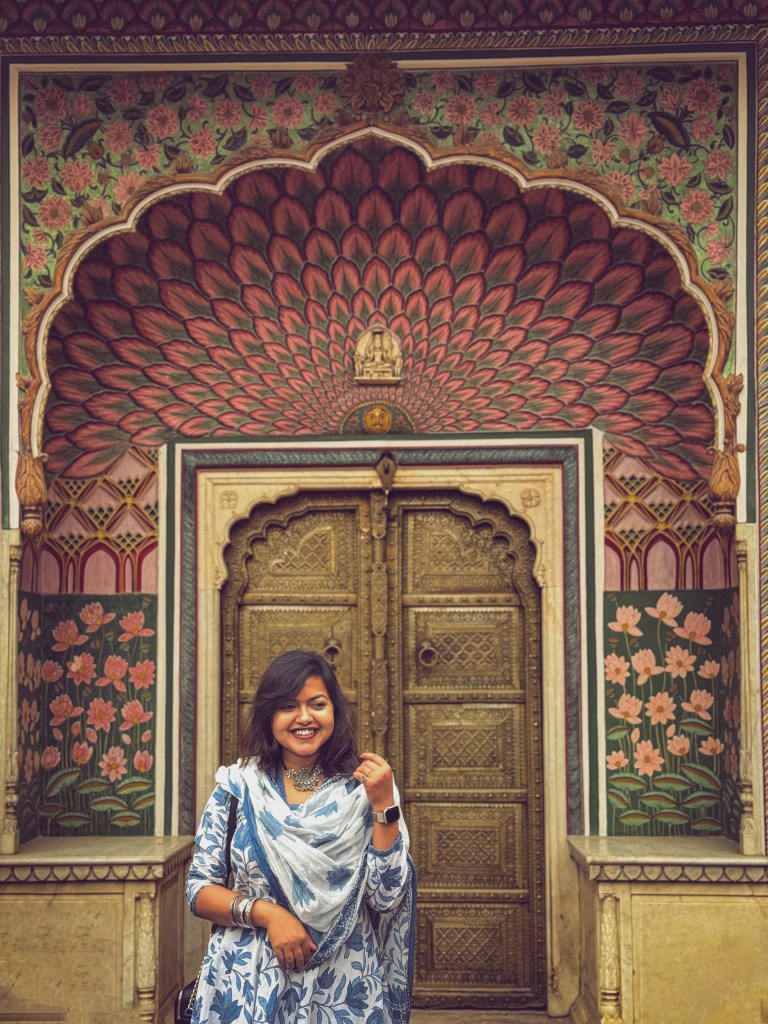
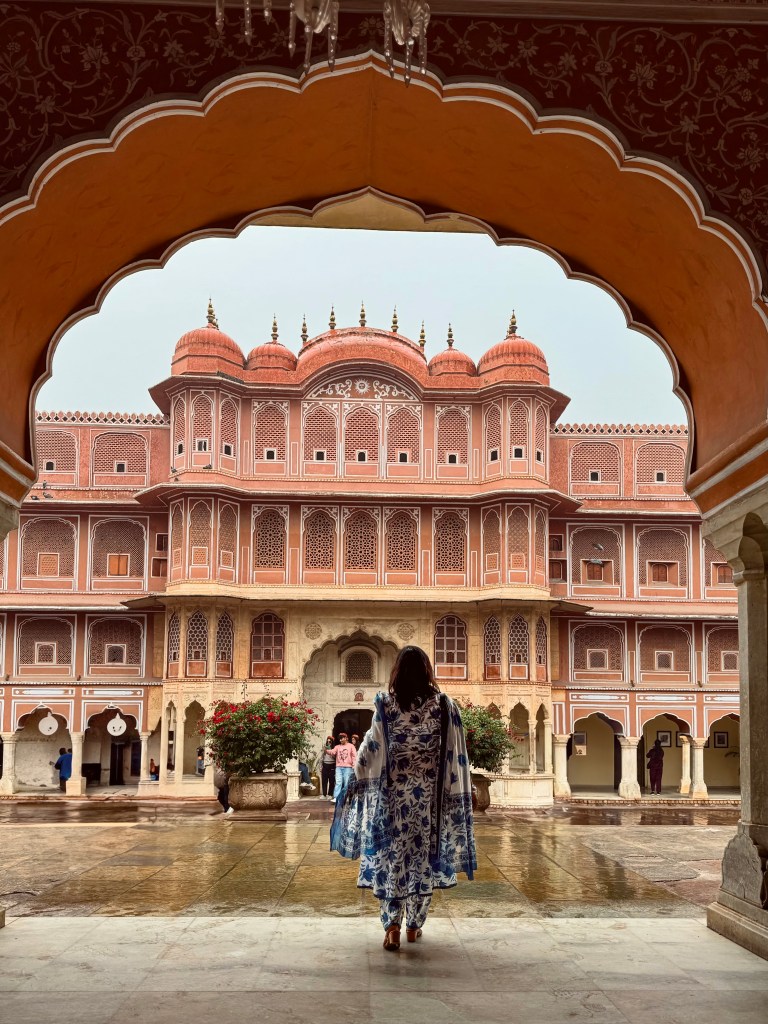
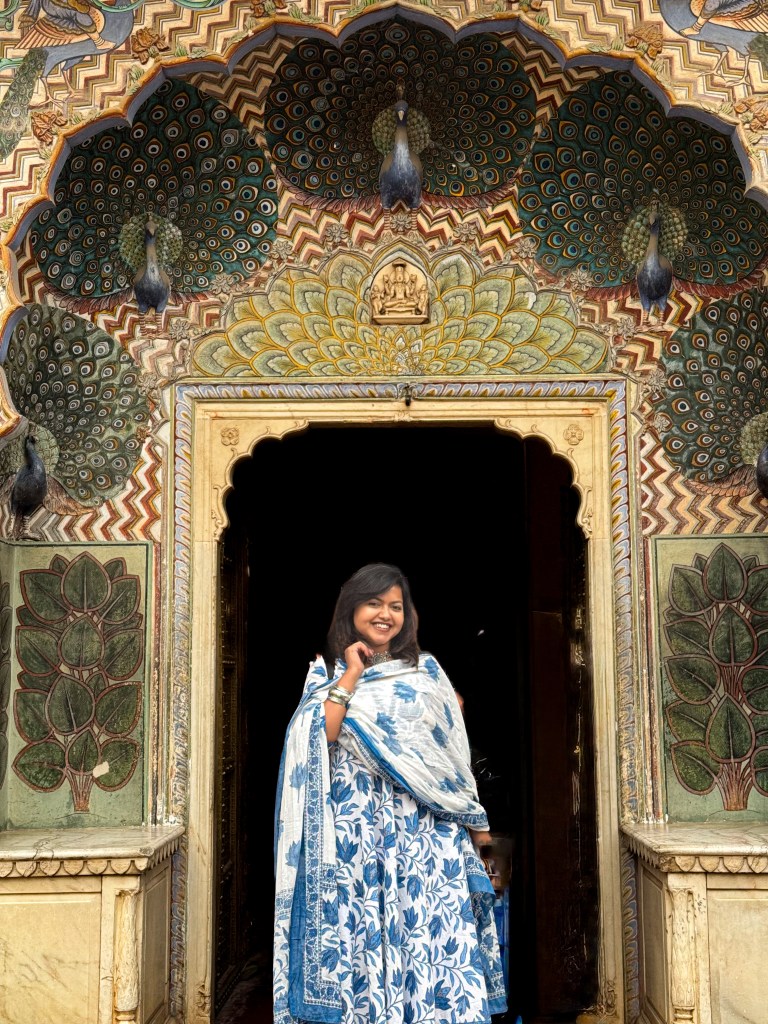
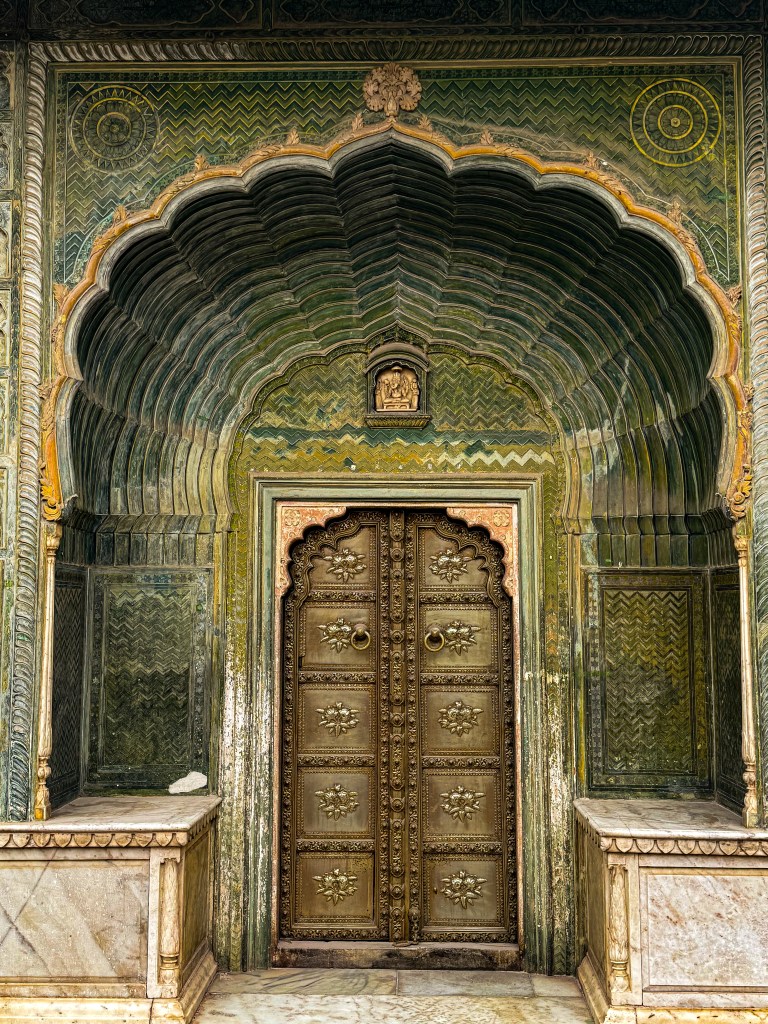

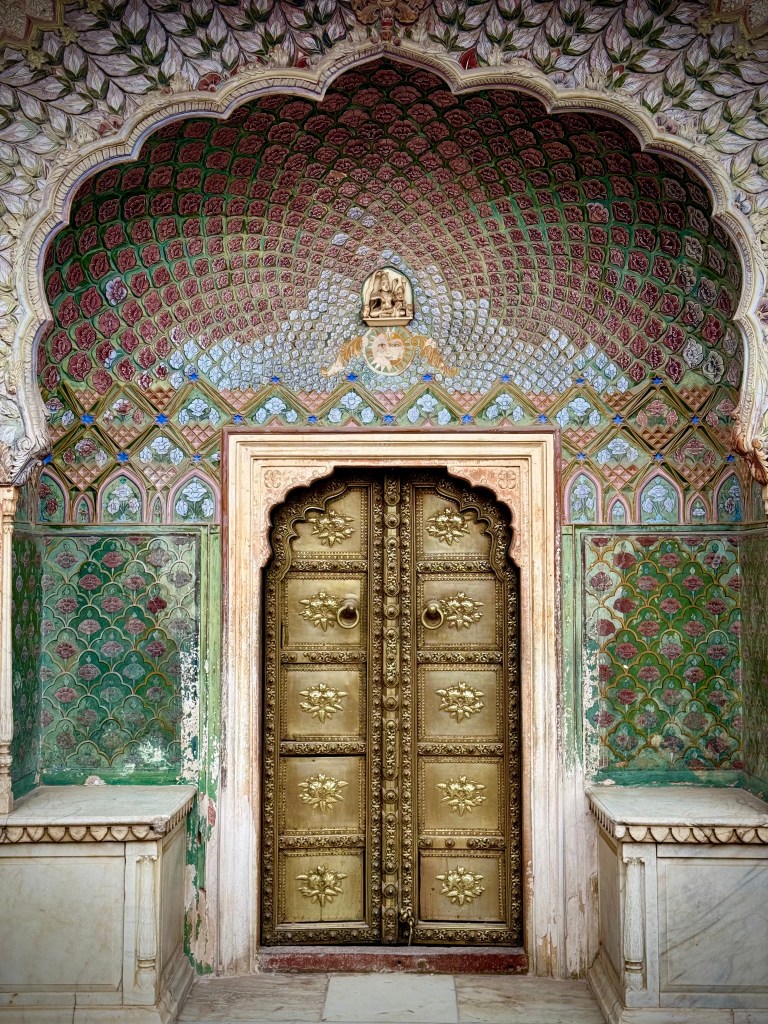
Once you are get out of the palace exit, this UNESCO World Heritage Site just lies to the right of it. It has the world’s largest stone sundial as well as many other astronomical instruments built back in 1734.
Opening Hours : 9 am to 4.30 pm
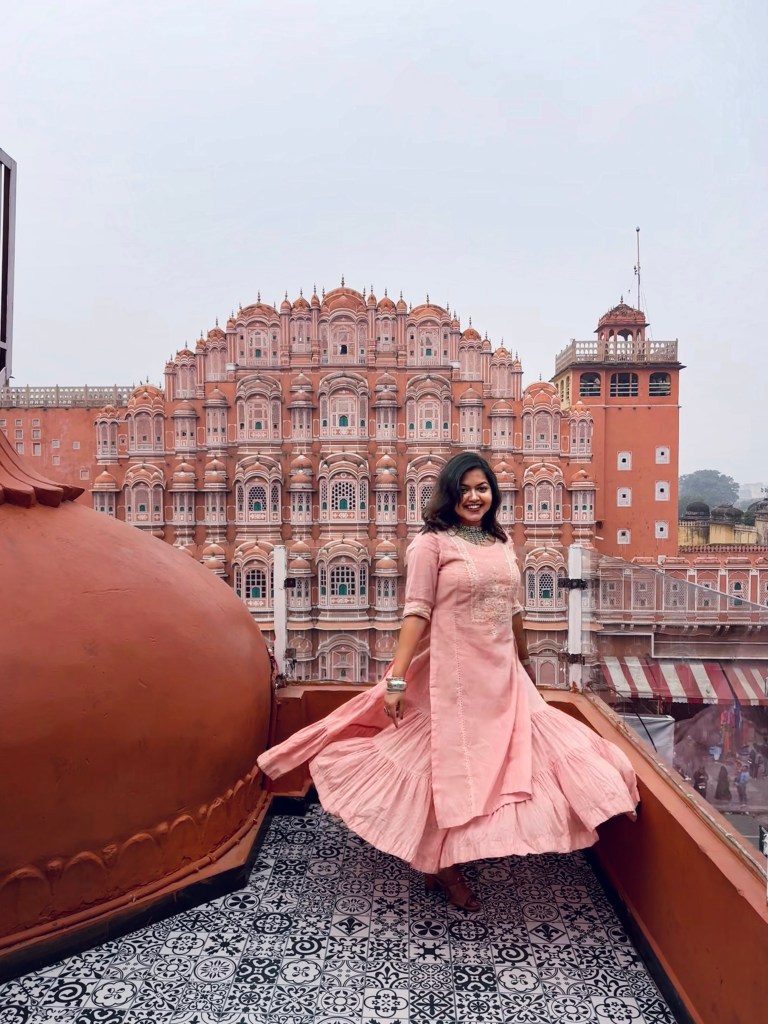
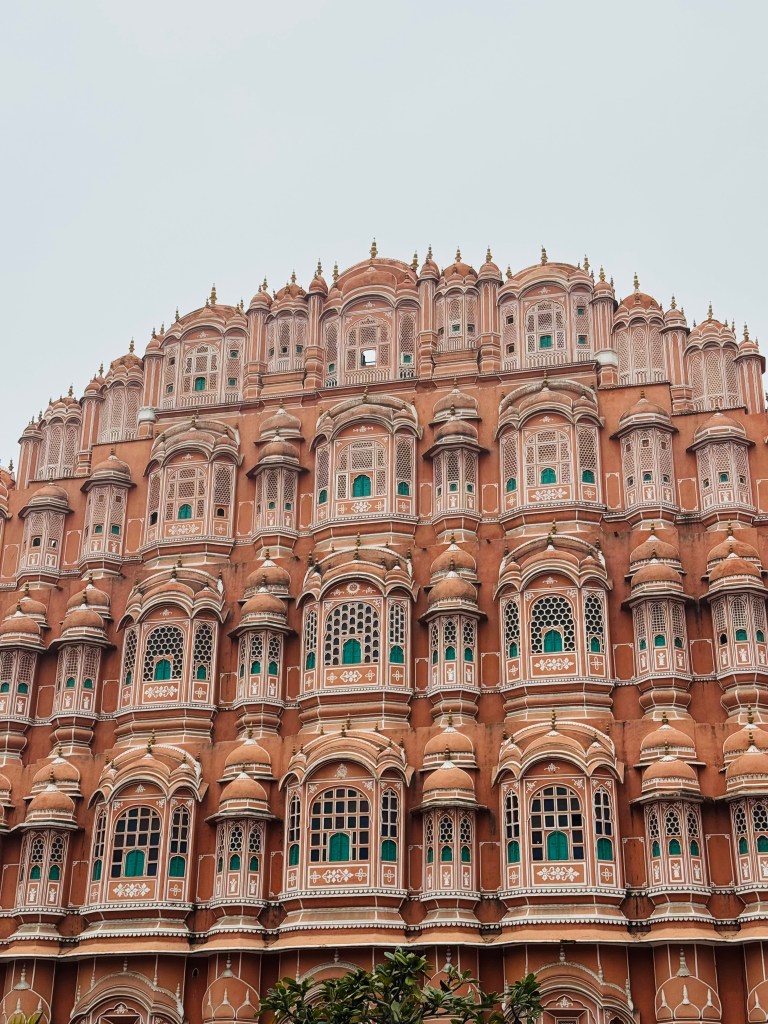
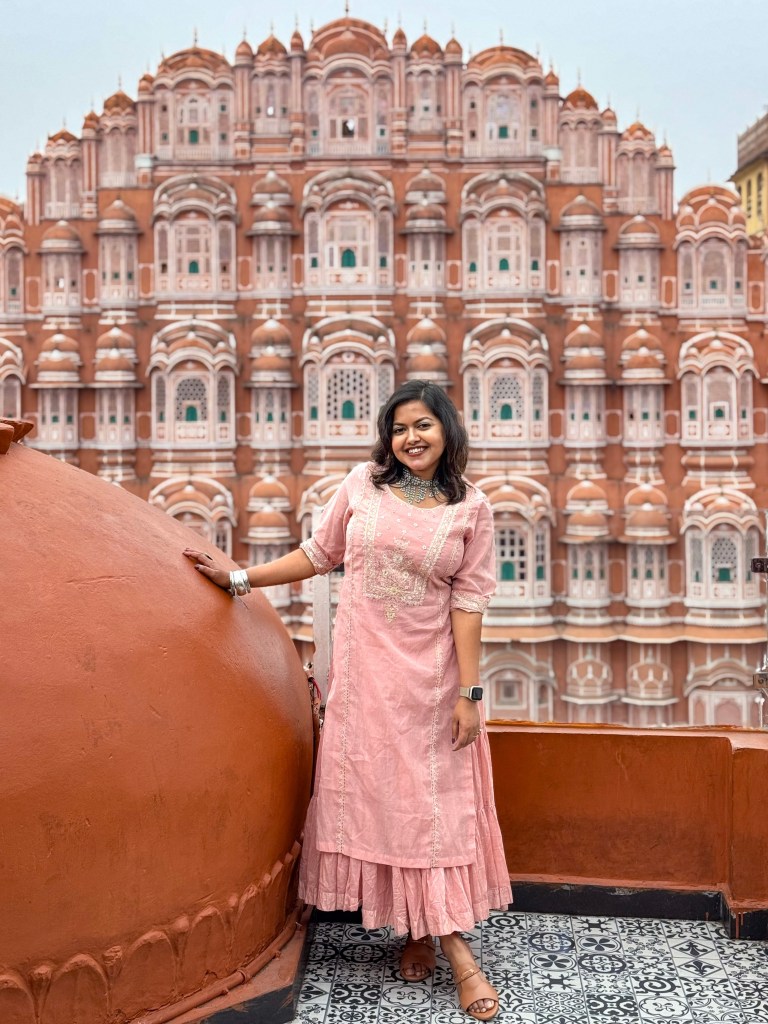
Continue your journey towards the Hawa Mahal next as you will find this big facade, which has become the representative image of Jaipur in the World. We recommend to visit this during the day and for much better views, there are few roof-top restaurants (Wind View Cafe & The Tattoo Cafe & Lounge) just across the street that offer spectacular views of this place.
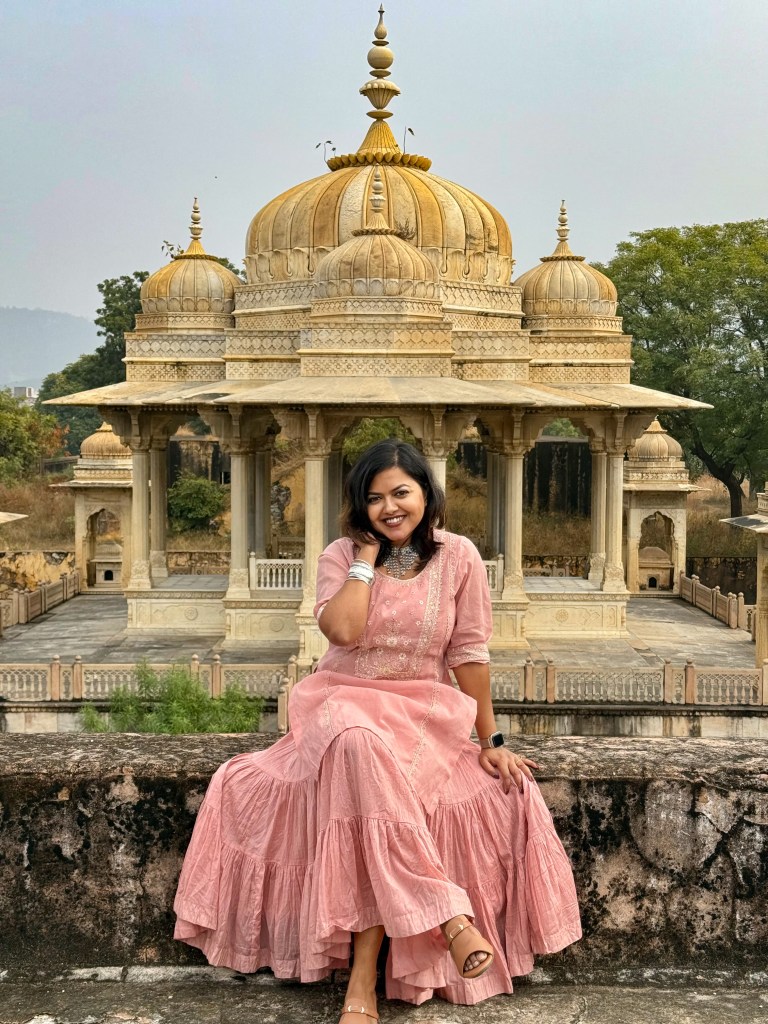
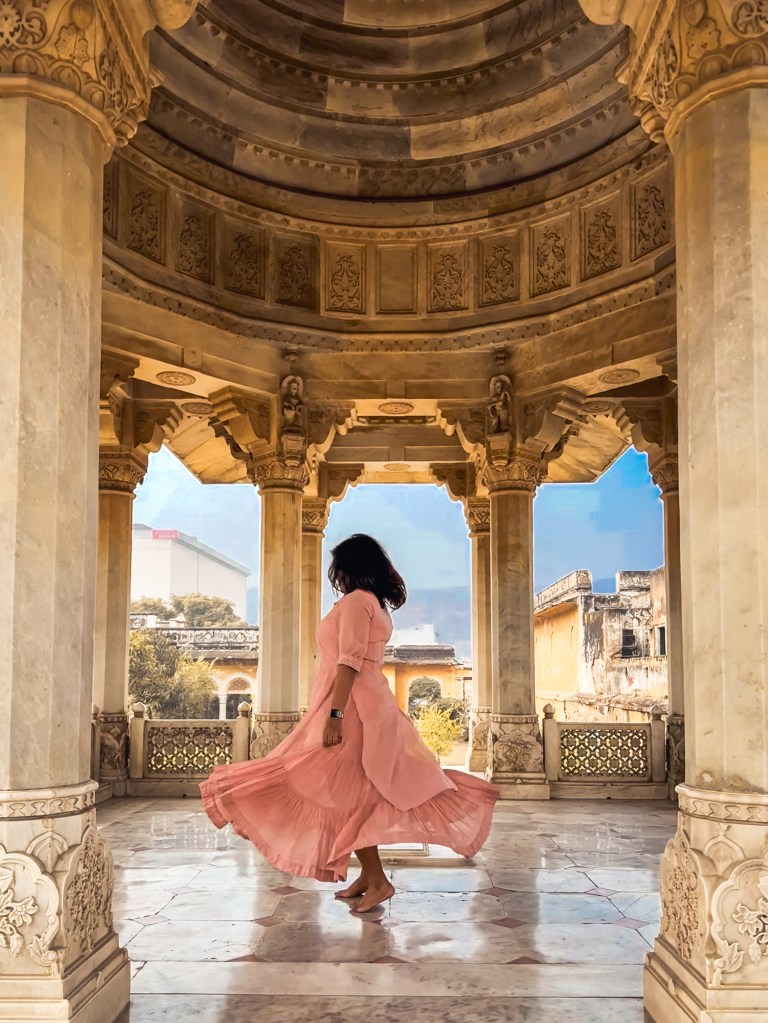
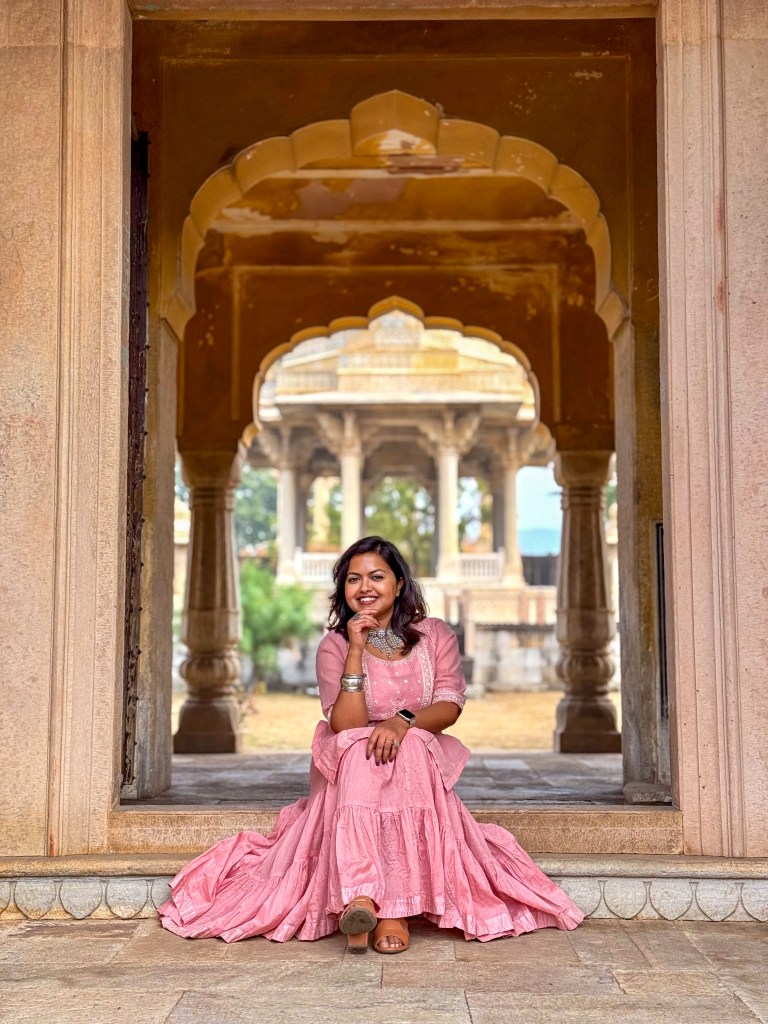
Post lunch, head to this place, which is a serene garden with beautiful architecture, that once served as the meeting place for the queens. You can take a tuktuk (or taxi) from Hawa mahal towards Jal Mahal and this place lies enroute.
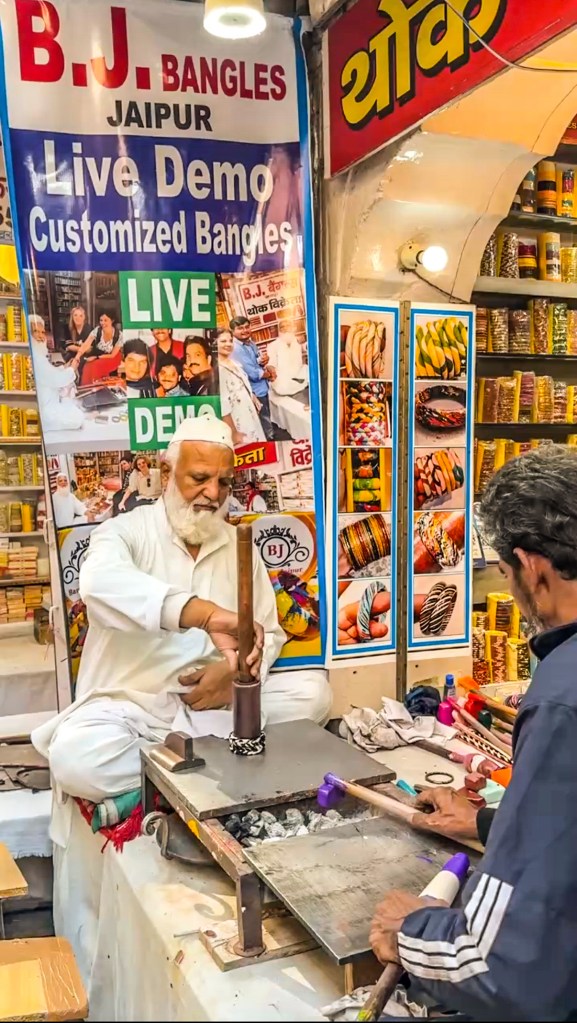
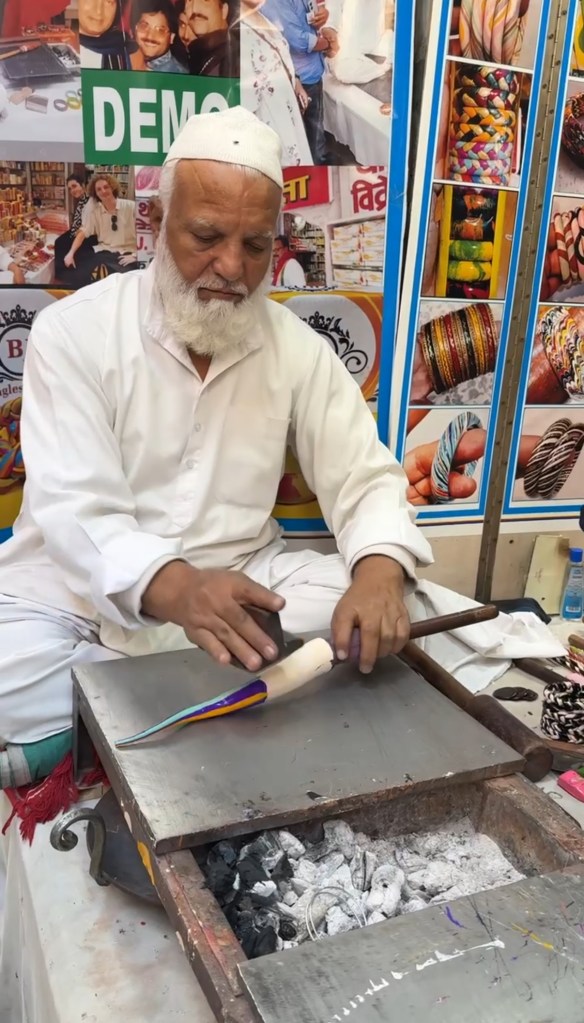
Tripolia Bazaar is another treasure trove in Jaipur, well known for its exquisite lac bangles, brassware, and textiles. This market is particularly popular among brides and jewelry enthusiasts, as it offers a stunning collection of traditional Rajasthani bangles and other accessories. In particular, visit the “Maniharo Ka Rasta” where you can visit and buy the famous bangles.

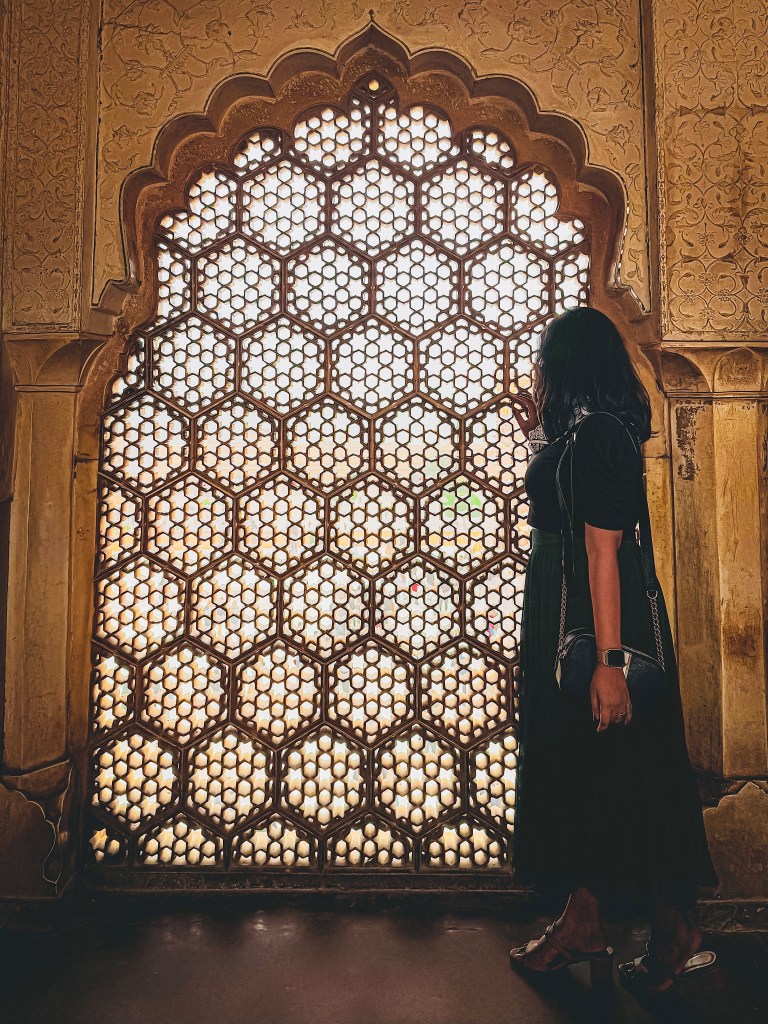
Begin your day with this majestic fort located on a hilltop, offering stunning views of the Maota Lake. Explore the Sheesh Mahal, Diwan-e-Aam and the Diwan-e-Khas. You can take a tuktuk or a taxi from center of Jaipur. Just beware, they will drop you off at the bottom of the fort and you will have to climb some stairs to reach the fort. However, this is not a steep climb. You definitely will be swarmed by locals who either will tell you that you have to take a jeep or ride an elephant. Unless you want to enjoy those, we will suggest this 10 min climb up some ramps and stairs.
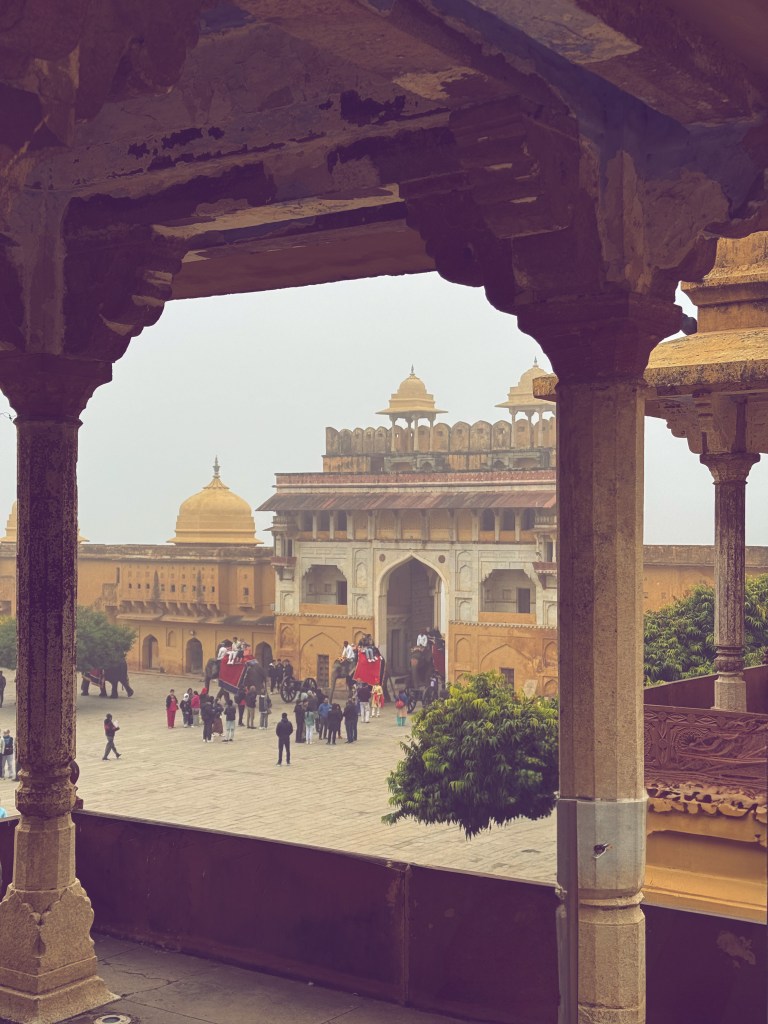
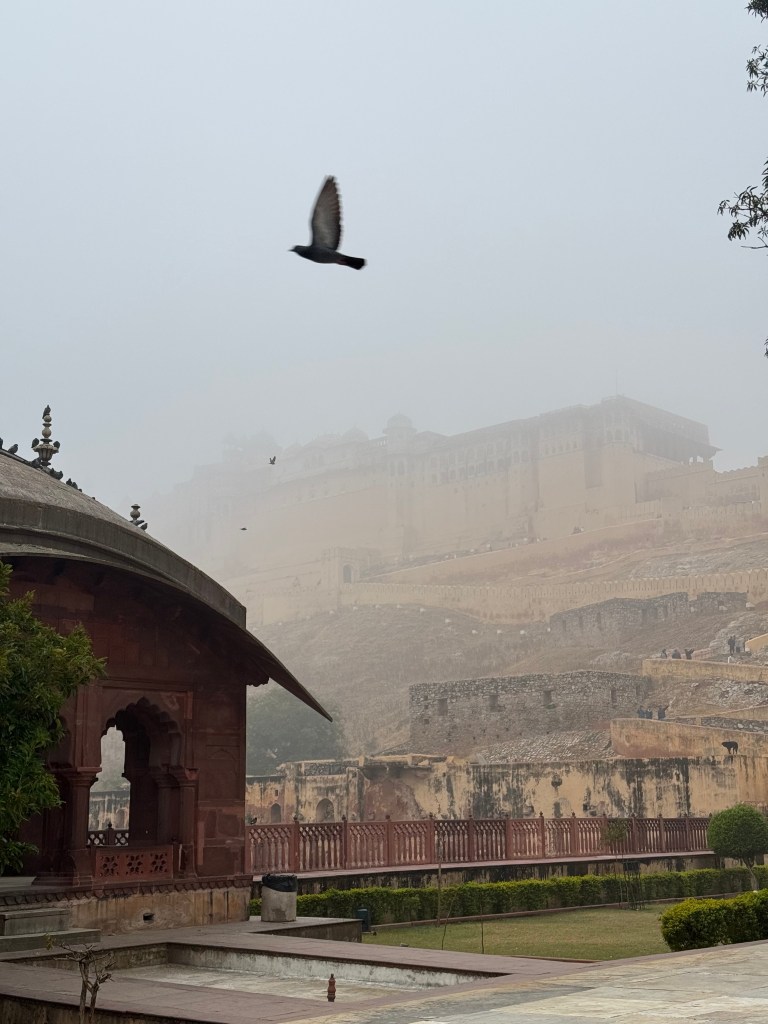

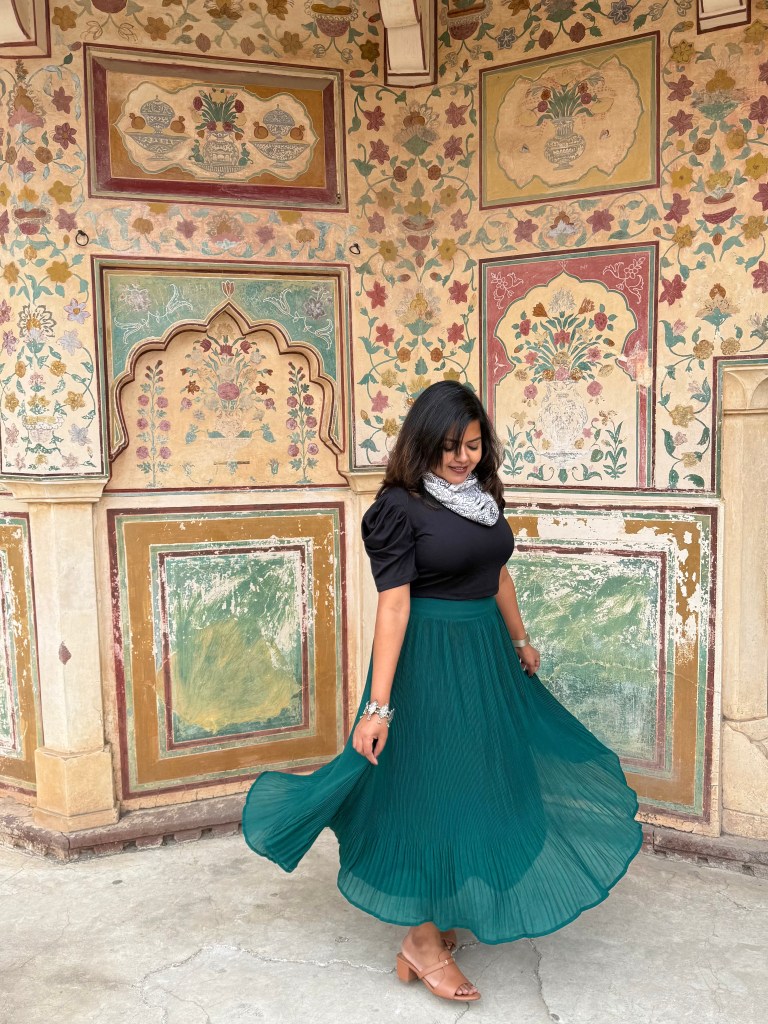

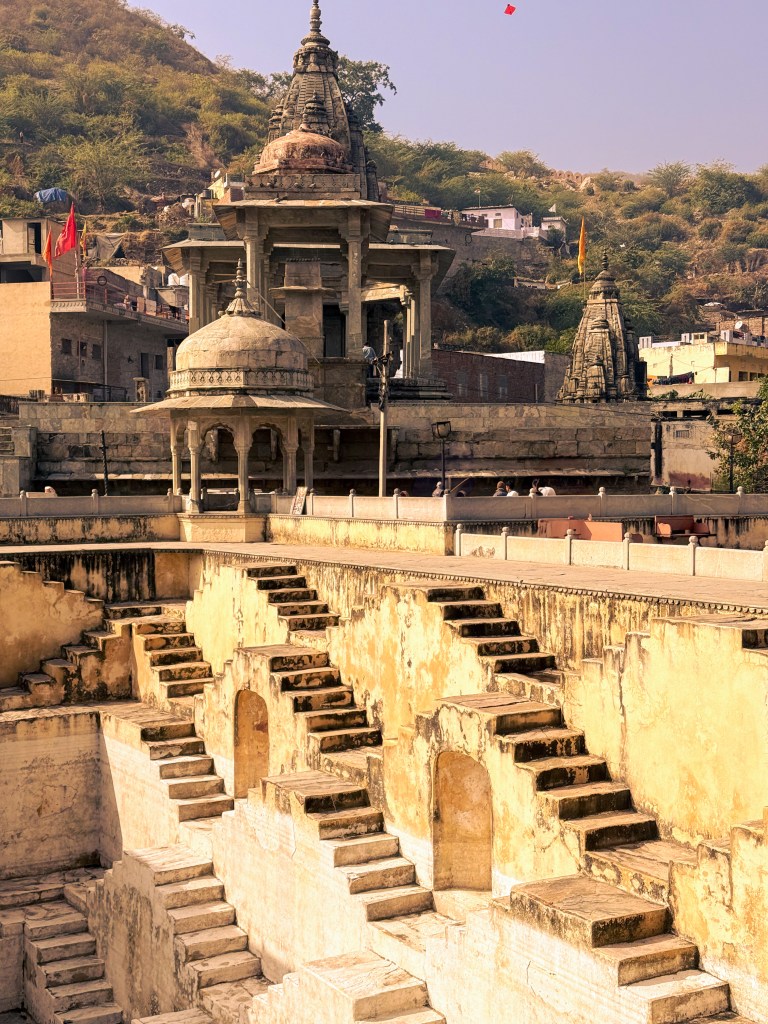
Just below the fort, on the other side, lies this beautiful 16th-century stepwell & the king’s temple that are perfect for photographs.



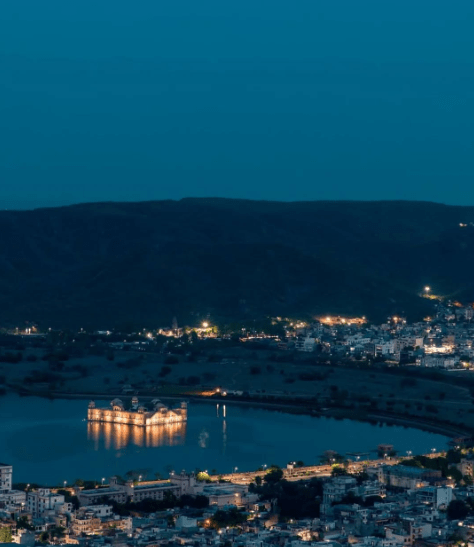
A stunning palace floating on Man Sagar Lake. Stop by for photos and enjoy the surroundings. We felt it to be overly crowded specially in the afternoon, however this place was not quite high on our priority list.
A perfect spot to see Jaipur from above, especially if you love scenic landscapes. This place is also a perfect point to catch the sunset over the city. However, we had to skip this place as the weather didn’t permit us.
For those looking for an eclectic mix of traditional and contemporary fashion, Bapu Bazaar is the place to be. This bustling market is known for its vibrant Rajasthani textiles, block-printed fabrics, and leather goods, including the famous Mojari (Jaipuri footwear).

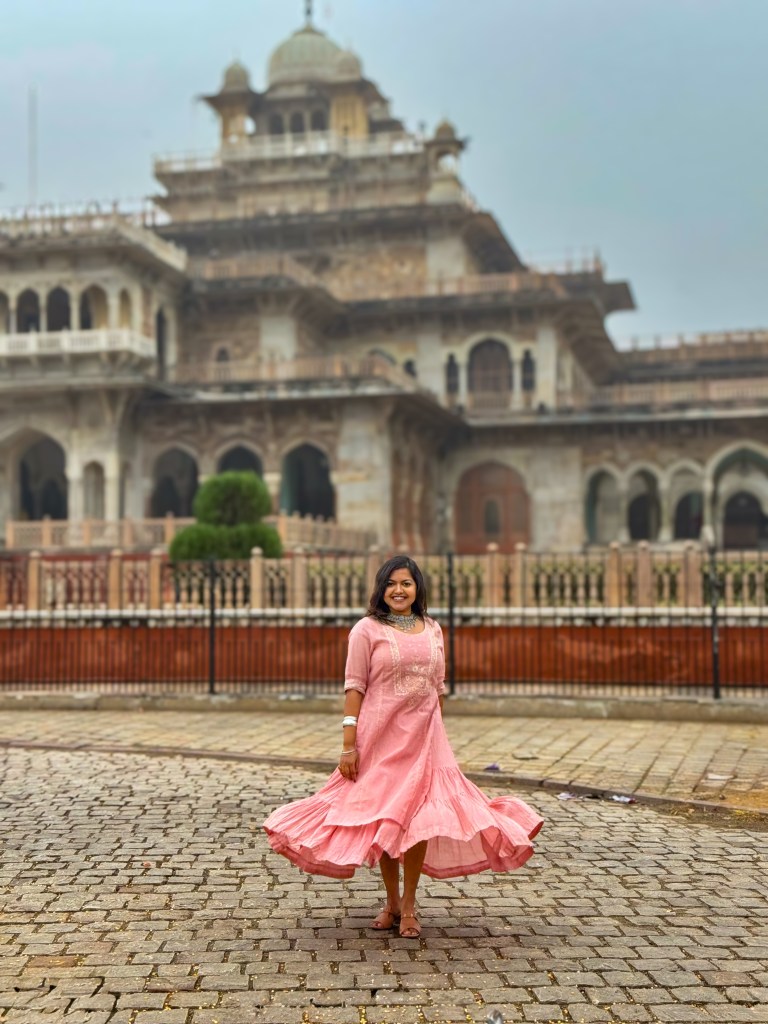
Start the day early with a visit to the Albert Hall Museum to witness the spectacular sunrise and the amazing pigeons creating a perfect frame for you to click. Be sure to reach little early, as you might find crowds (specially wedding photographers) building up as the day progresses.


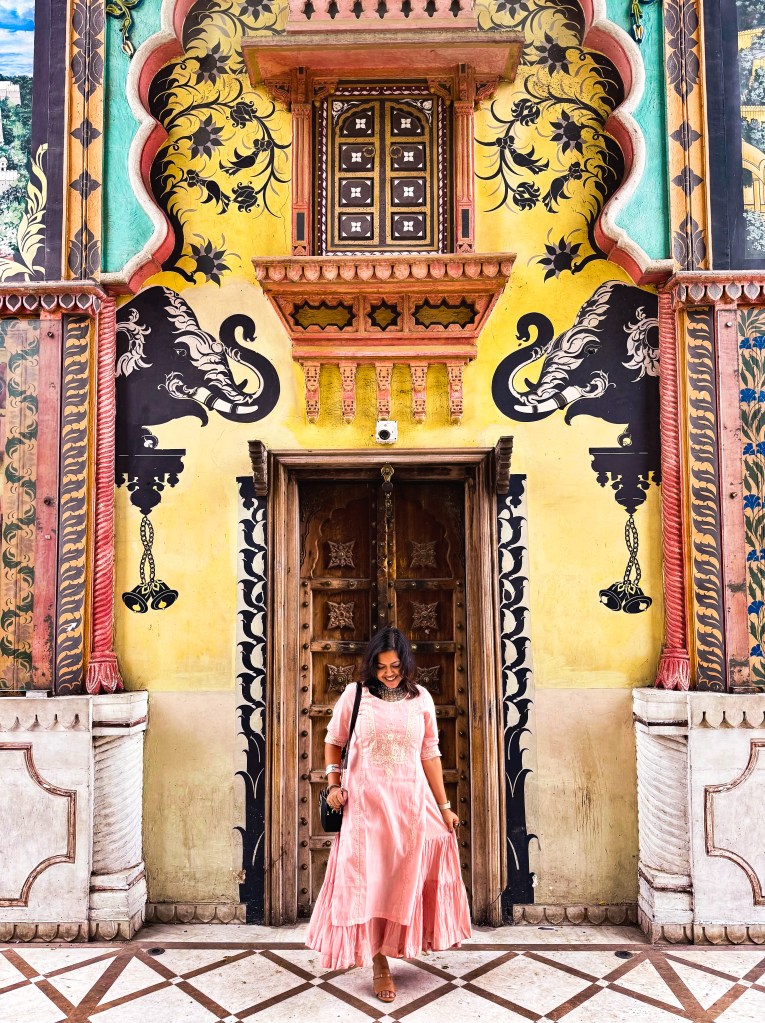
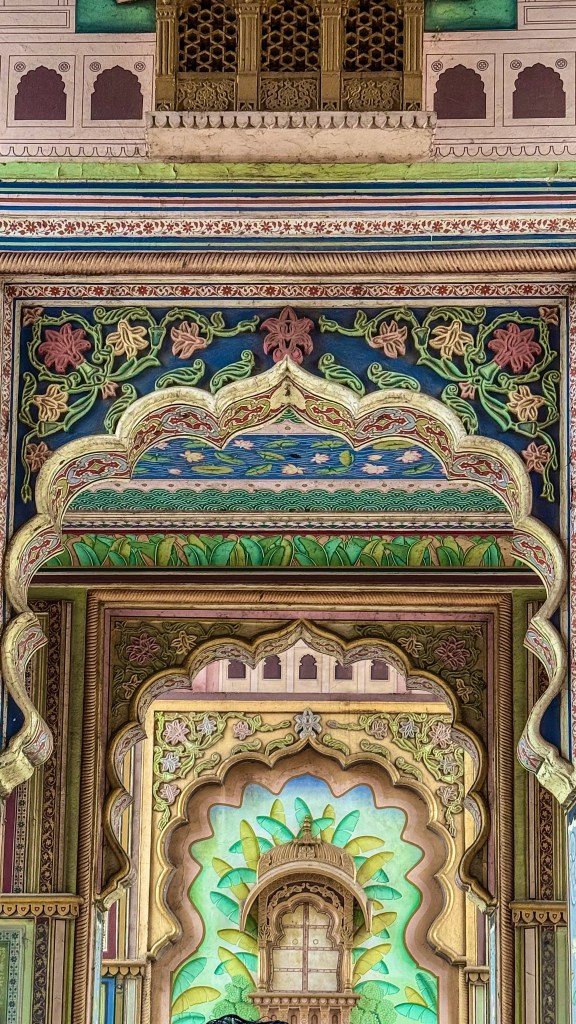
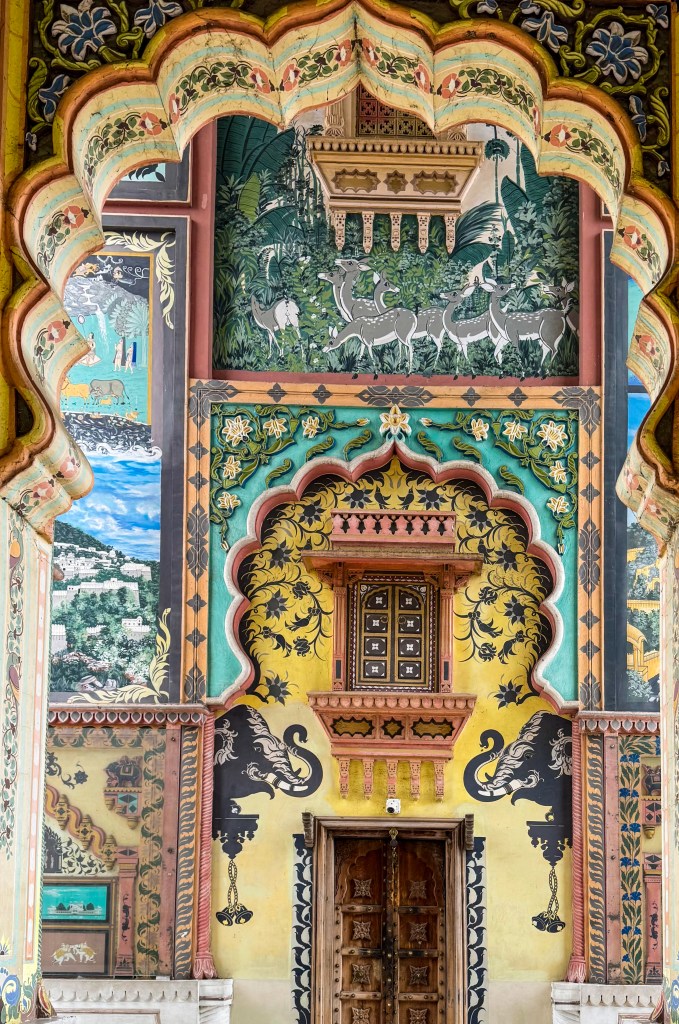
Next visit the Patrika gate, which is a relatively modern addition to the Pink City that has quickly become one of its most iconic landmarks, drawing visitors with its intricate designs and photogenic charm. Its design is inspired by the traditional Rajputana architecture, with elements reminiscent of Rajasthan’s historic forts and palaces. Try to reach this place little earlier if possible in order to avoid the rush of wedding photographers (again, I know!!).

Johri Bazaar is the crown jewel of Jaipur’s marketplaces, renowned for its dazzling collection of jewelry. The name ‘Johri’ itself means jeweler, and this market lives up to its reputation. Here, you will find an extensive array of Kundan, Meenakari, and Polki jewelry, crafted by skilled artisans whose craftsmanship has been passed down through generations.
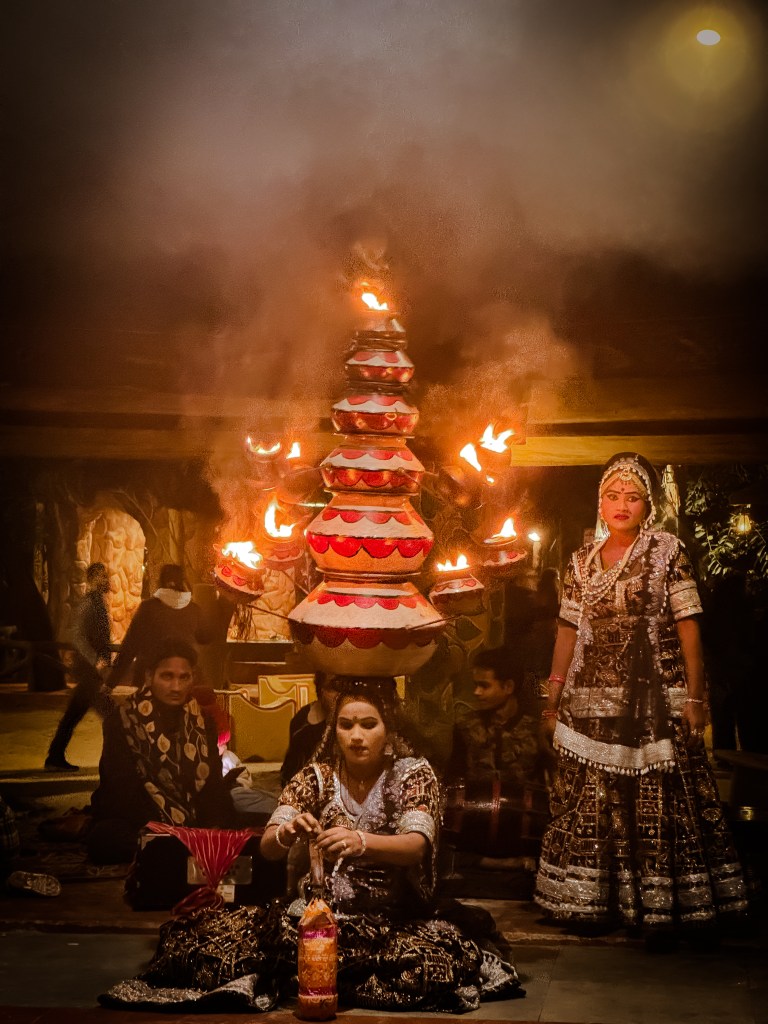
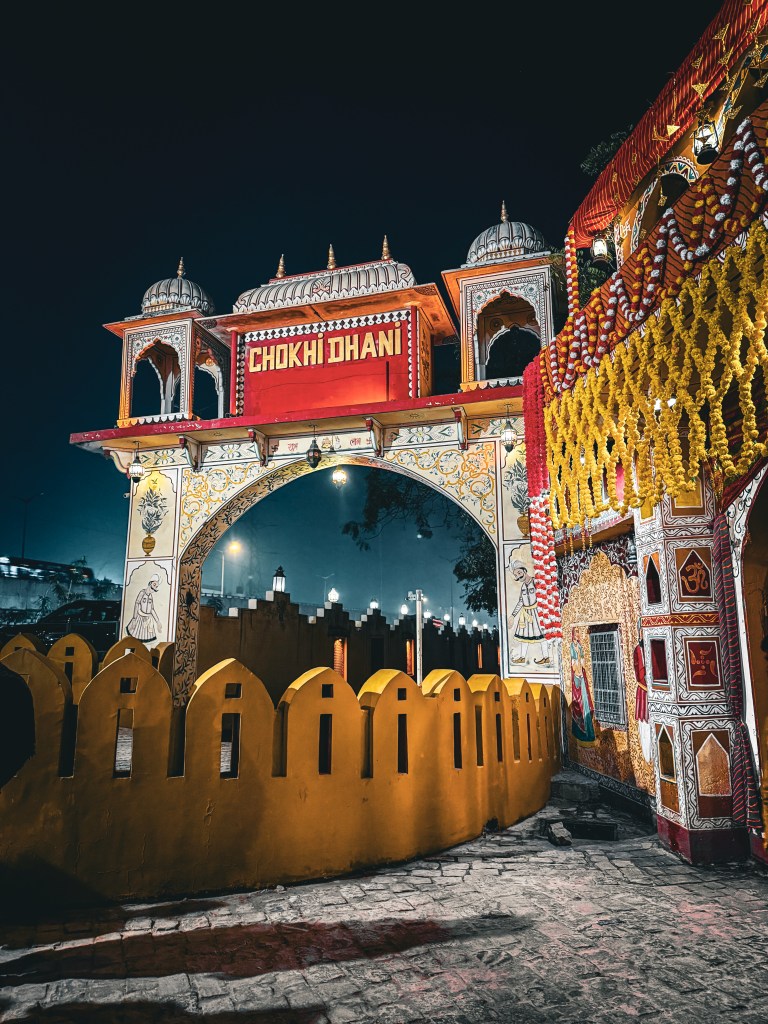
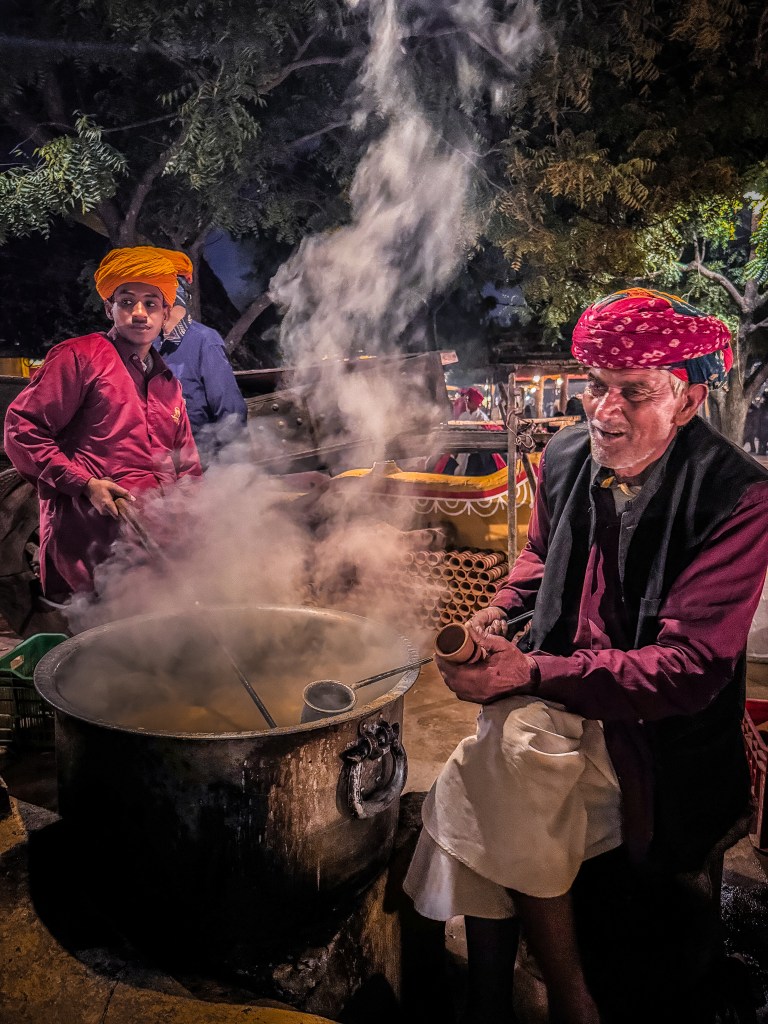
Finally, finish your trip with a visit to Chokhi Dhani, a place that provides a true essence of Rajasthan, with immersive Rajasthani-themed experiences, authentic food , folk music, dance and cultural activities. There is a all-encompassing charge that accounts for entry and all the various activities inside. We absolutely loved the all-you-can-eat food. You can book your tickets from their official website.
Opening Hours : 5 pm to 11 pm
How to Reach : Take a 30 mins cab ride from Jaipur
If you are visiting Jaipur, your trip is incomplete without certain dishes. These include
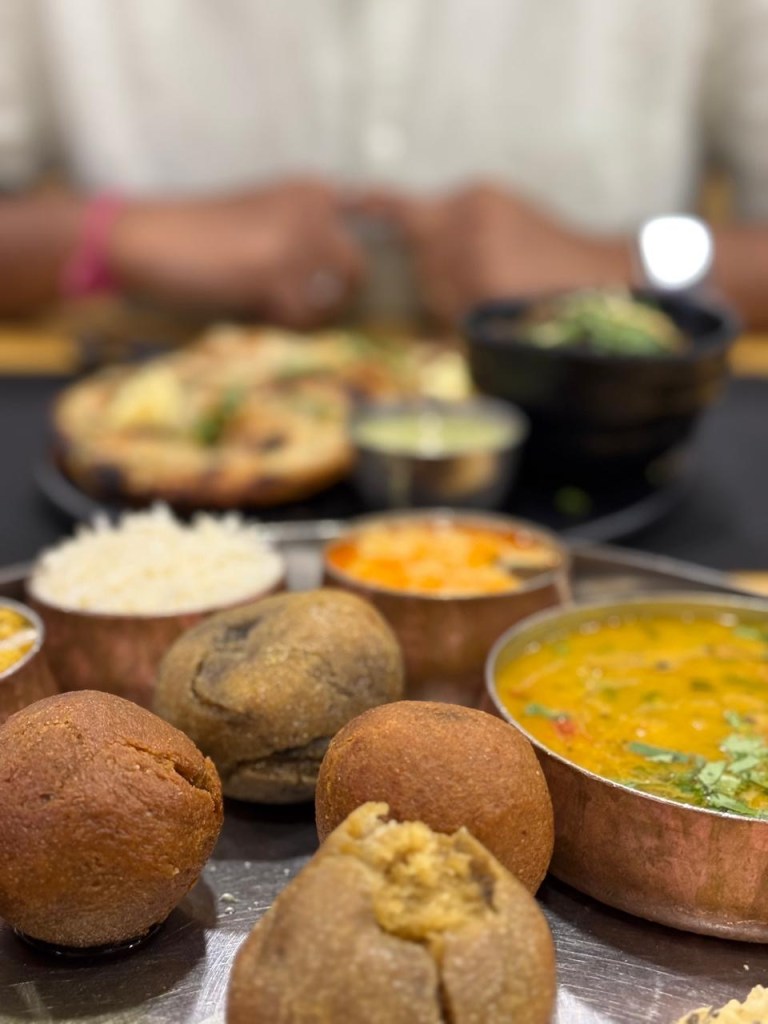
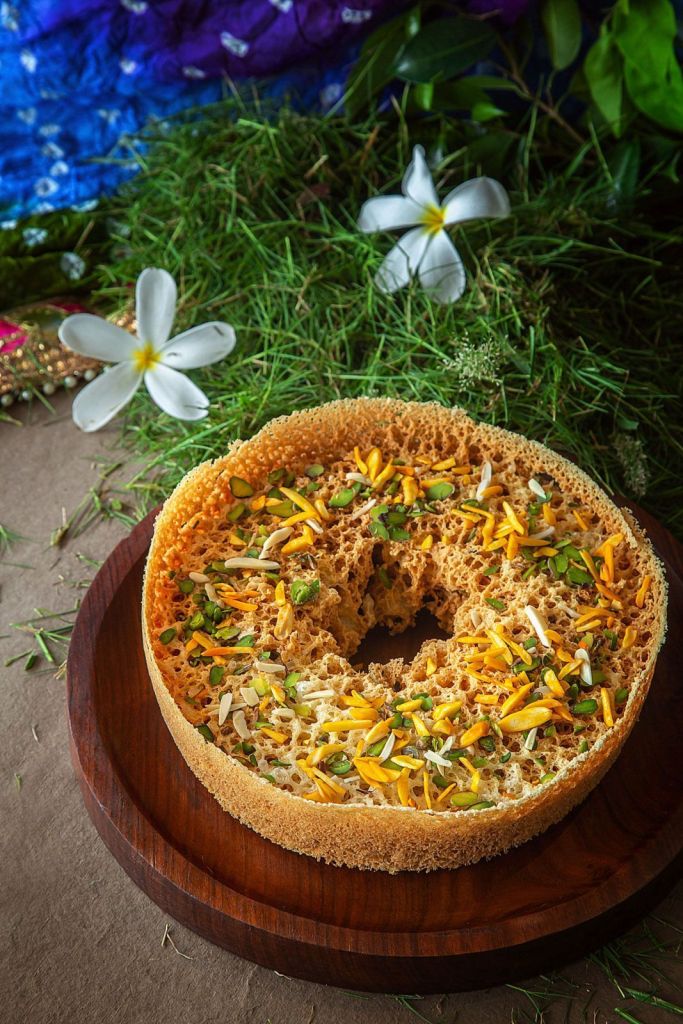
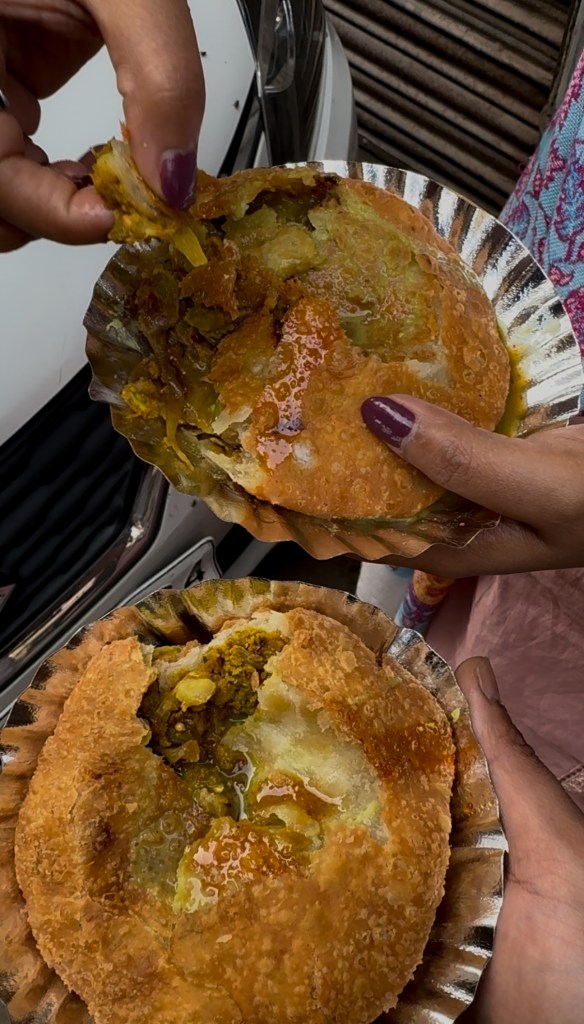
There are many places where you can try these items, however during our trip, we found this place called “Thali & More” where we tried the Daal Baati Churma and their Amritsari Kulcha. Both the items were really good and we highly recommend this place for lunch. Pyaaz kachori & Mirchi Bada are another very staple dishes of Rajasthan, you will find these almost at every corner of Jaipur. So we can recommended any street food shop who sell fresh kachoris. We tried these here and both of us really loved it. We tried the Handi Restaurant for the Laal Maas and their iconic Jungli Maas for lunch. This place is usually little crowded with a waiting of about 10 mins, but the food is worth it. Even they have some very good Awadhi food options. Ghewar is THE dessert of Rajasthan and it is something one should not miss if they are visiting here. This blog contains a nice list of places where you can try this dessert.
P.S. Although the whole trip was really amazing, however due to some time and weather constraints, we really couldn’t go to Bar Palladio. It was on our to-do list, and we would really like to go back once to Jaipur to visit
Springtime in Paris is nothing short of enchanting, and nothing captures the city’s fleeting beauty quite like the delicate pink and white cherry blossoms. As the cold of winter fades, Paris bursts into bloom, transforming parks, gardens, and hidden corners into dreamy pastel wonderlands. Whether you’re a photographer, a nature lover, or simply looking for the perfect spot to enjoy a peaceful afternoon, this guide will take you through the best places to see cherry blossoms in Paris, the ideal time to visit, and tips for making the most of this magical season.
Since I adore flowers in full bloom, I never miss the chance to visit Paris’s cherry blossom spots each spring—and I always bring my dear husband along on this annual tradition. As a local, I discover a new hidden gem or two every year, whether on my way home from work or during a metro ride. In this guide, you’ll find the exact locations of these stunning cherry blossom spots, along with map to help you explore them with ease.
The best time to see cherry blossoms in Paris is from mid-March to mid-April, though the exact blooming period varies depending on the weather and temperature. The duration of the bloom also depends on the weather, with rain often causing the petals to fall more quickly.
Typically, the white-petaled cherry blossoms begin to bloom around mid-March, reaching full bloom by the end of the month. Meanwhile, the pink Kanzan cherry blossoms start blooming in early April and last until mid-April. Once in bloom, cherry blossoms usually last about two weeks, so be ready to visit as soon as you hear they’ve arrived!
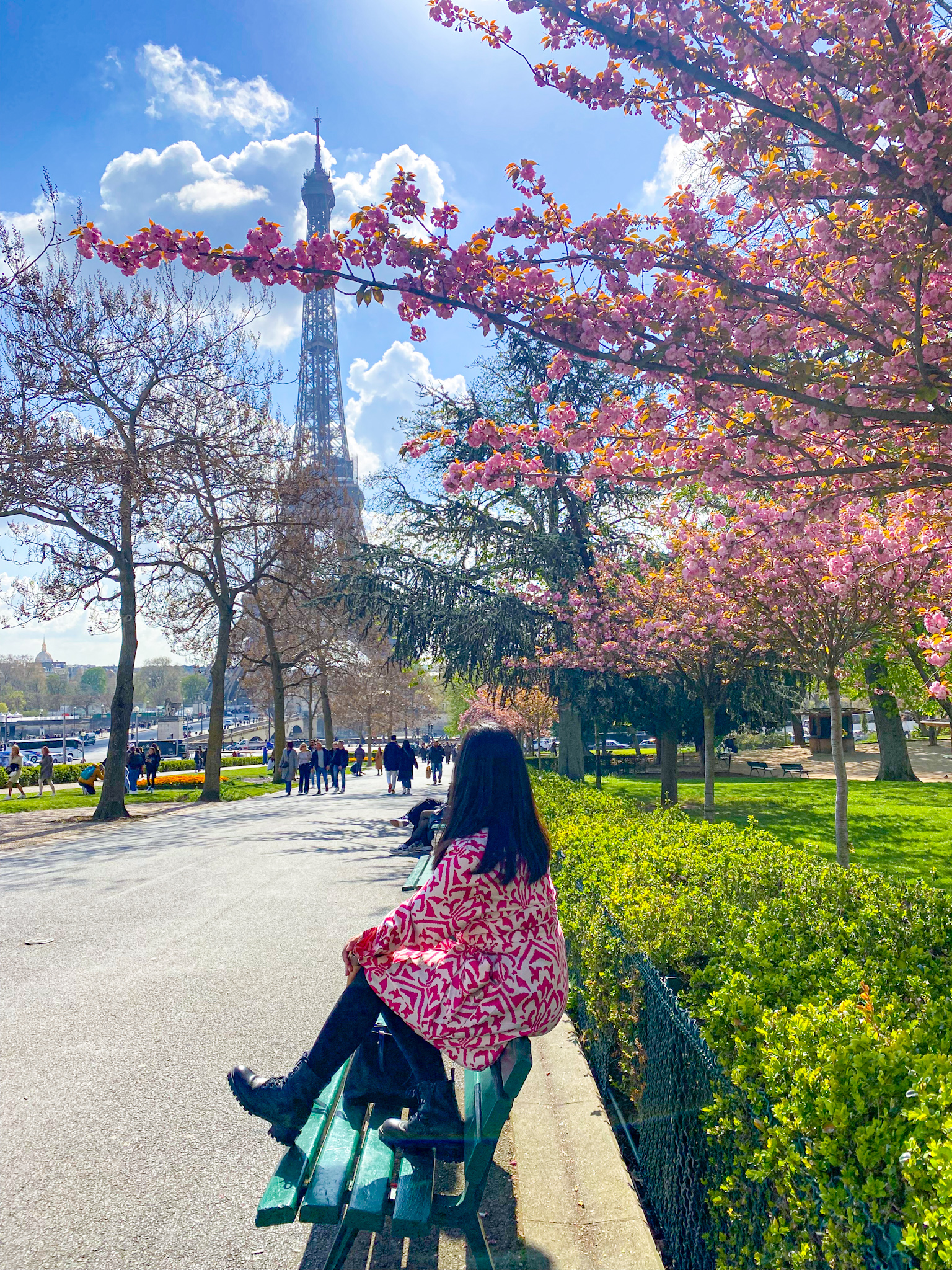
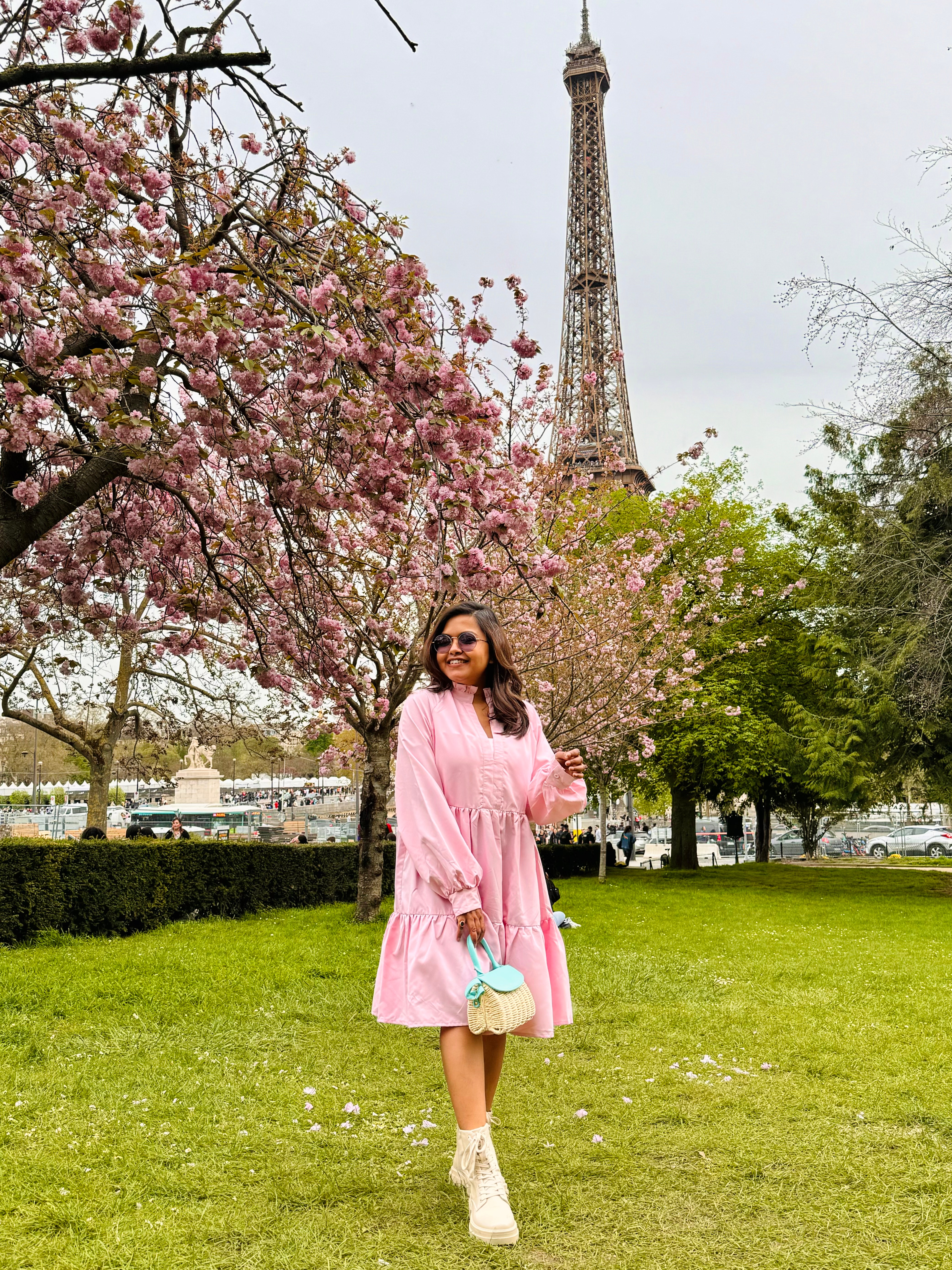
What could be better than starting your cherry blossom spotting in Paris with a view of the Eiffel Tower? During cherry blossom season, you’ll find beautiful trees in bloom on both sides of the street next to the Jardins du Trocadéro, perfectly framing the iconic tower. With well-placed benches and a postcard-perfect backdrop, this spot is a dream for photographers and nature lovers alike.
As spring settles in, this area becomes quite crowded, especially on weekends or later in the day when tourists gather. However, if you visit early, you’ll often find the garden peacefully quiet, with a bench or two waiting for you to soak in the moment.
Best time to visit: The cherry blossoms here typically bloom from the last week of March to the first week of April. Although these are Kanzan cherry blossom trees, they tend to bloom a little earlier than others in Paris.
Location: Jardin des Trocadero
Even if it is one of my favourite spot in Paris in 2024 I found the condition of the trees were not in their best condition. So, I am keeping my finger crossed for this year
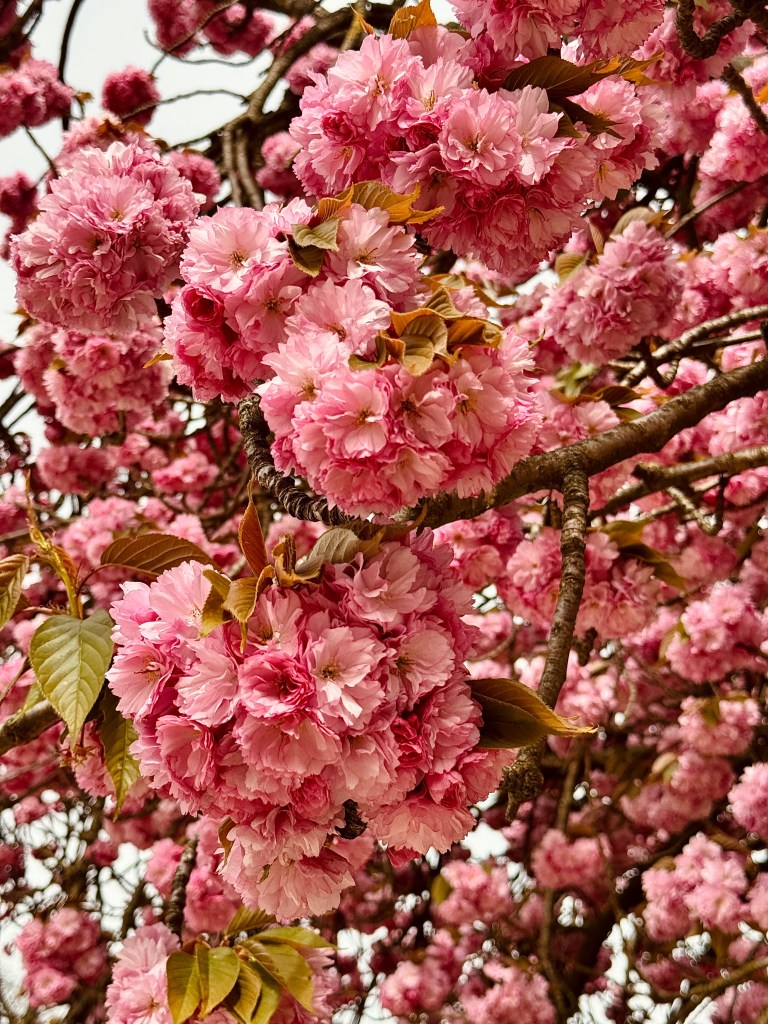
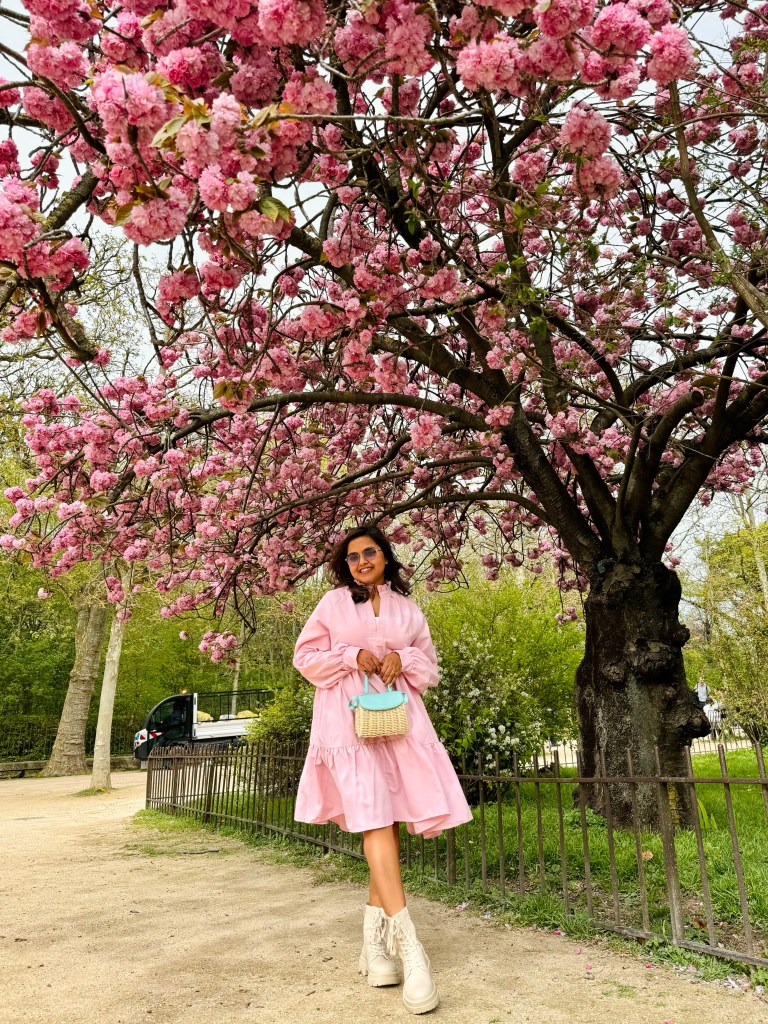
Located in the 5th Arrondissement, this garden is one of the most stunning parks in Paris, enchanting visitors year-round. During spring you can find the largest and most magnificent Kanzan cherry blossom tree in Paris. Alongside this impressive tree, you’ll find several other breathtaking cherry blossom trees, including the most spectacular white blossom tree I’ve seen in Paris.
Best Time: The cherry blossoms trees here typically in bloom by first week of April.
Location: Jardin des Plantes
The large pink Kanzan tree blooms a little later than the white blossoms. To witness all the trees in full bloom, it’s best to visit at the very beginning of April.

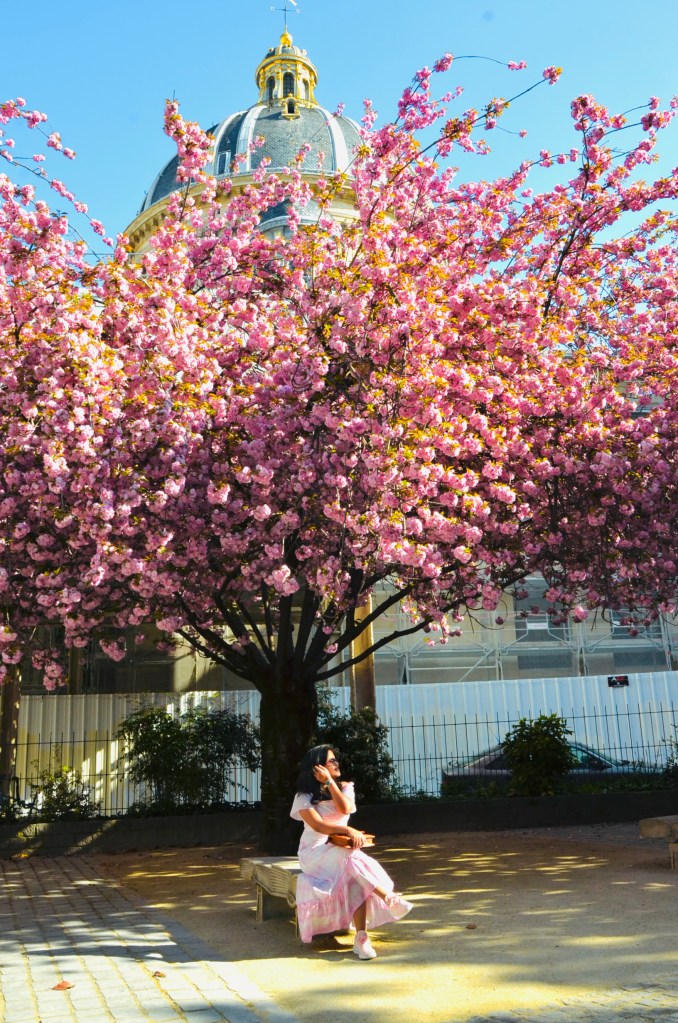
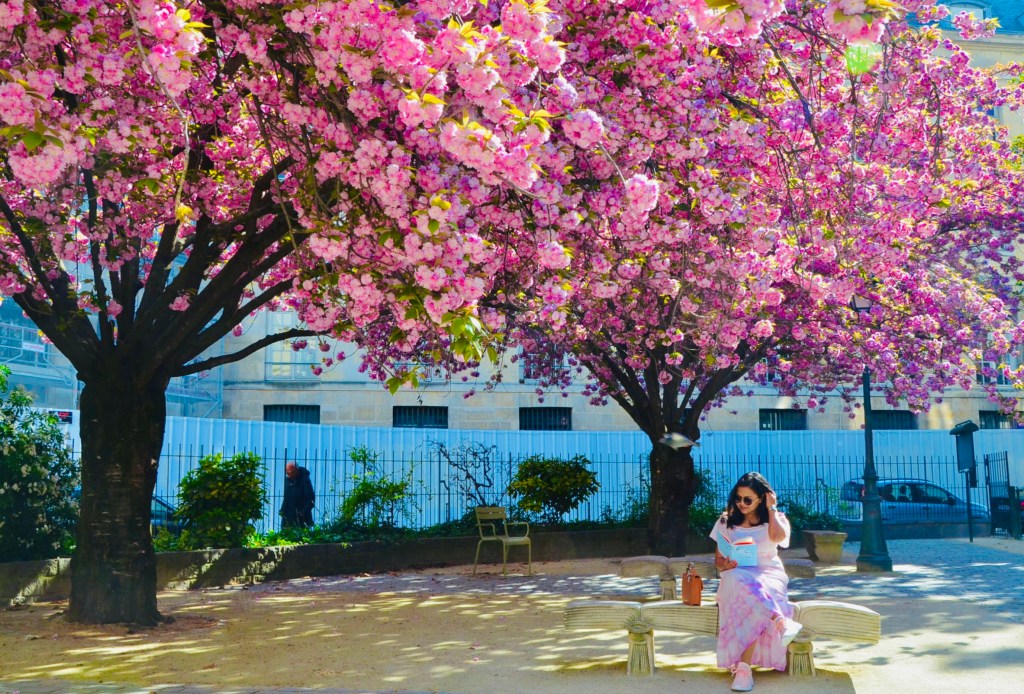
Tucked away in the charming Saint-Germain-des-Prés neighborhood, just behind the Institut de France, this quiet and peaceful little square is a hidden gem in Paris. It’s the perfect spot to unwind—whether you’re reading a book, enjoying a quick bite, or simply soaking in the beauty of spring.
Best time: Early to mid April
Location: Square Gabriel-Pierné
If possible head there on a weekday to get the place empty or head there in the morning.
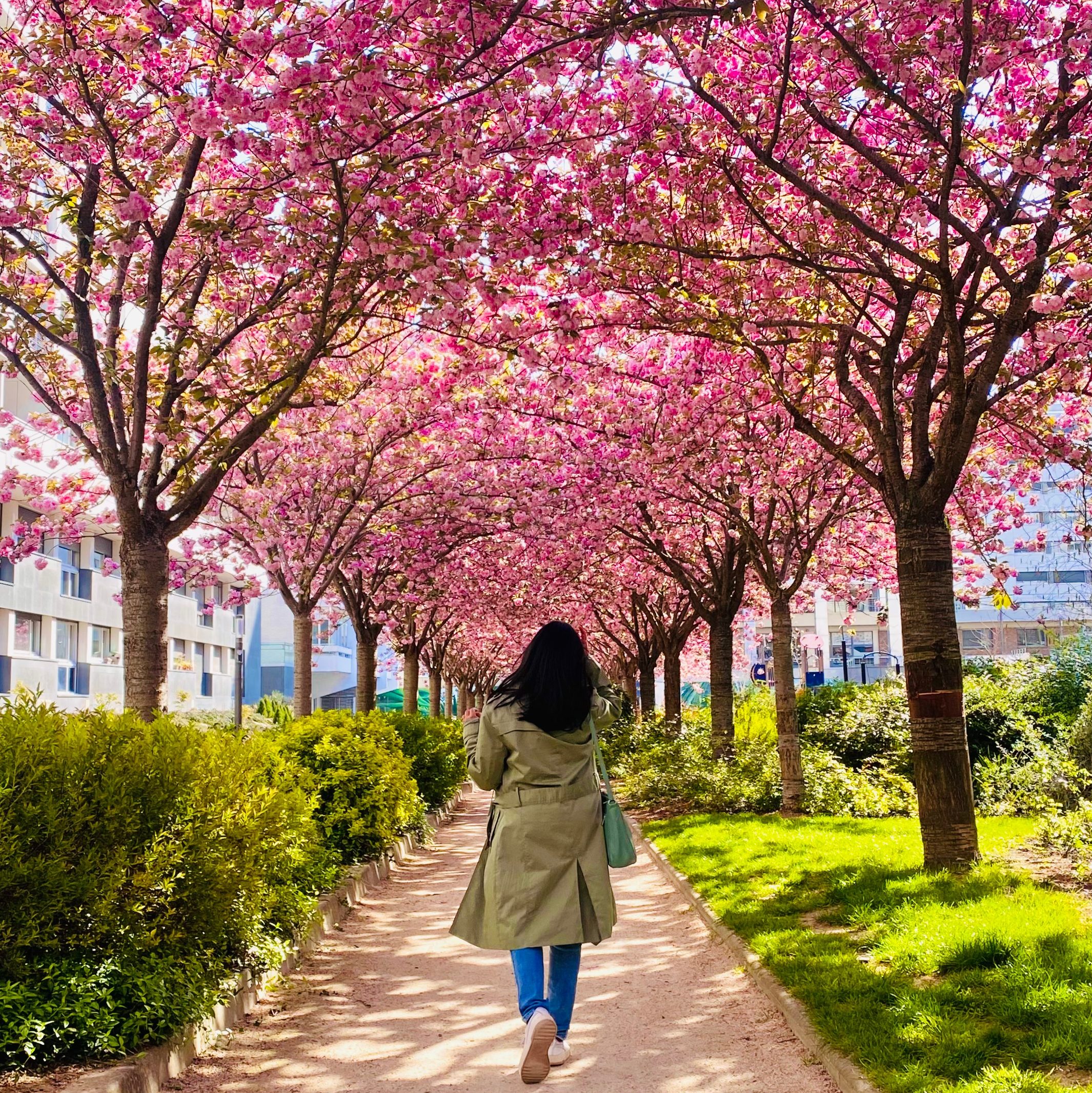
Any place where two rows of pink cherry blossom trees form a tunnel is a dream come true — but in my opinion, the blossom tunnel at Mail de Bièvre is the most breathtaking of them all. Of all the cherry blossom tunnels I’ve seen in Paris, this one stands out as truly spectacular, creating a magical corridor of pink petals that feels like stepping into a fairytale.
Tucked away behind residential buildings and hidden from the bustling crowds, this is one of the prettiest secret cherry blossom spots in Paris. During spring, I often escape here on my lunch break—just a few minutes’ walk from my office—to enjoy a peaceful moment under the blossoms. The quiet atmosphere makes it a perfect place to sit on a bench and savor lunch beneath a canopy of delicate pink petals.
Best time: First week of April to mid April
Location: Mail De Bièvre
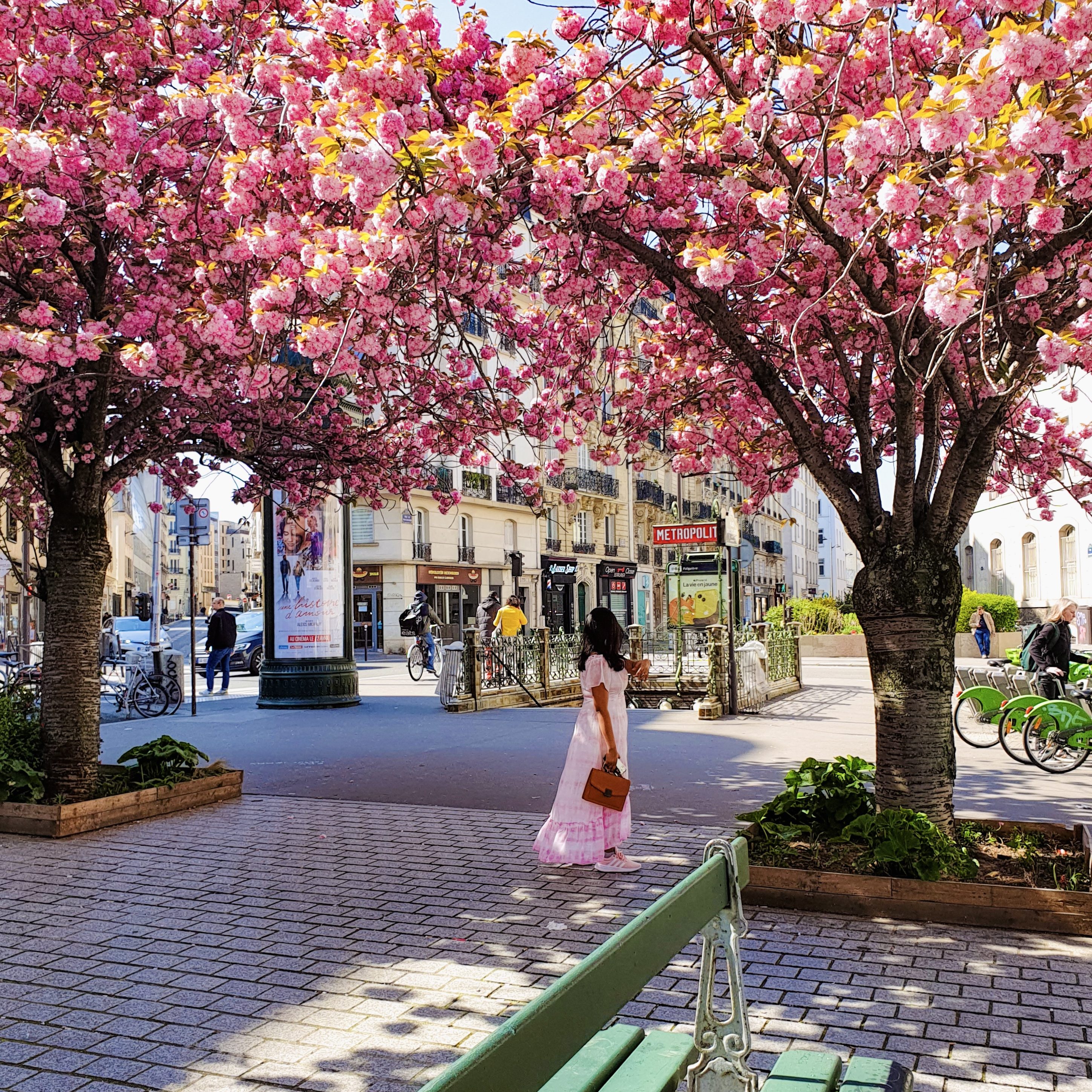
Some Paris metro stations are truly charming, with their vintage green signs adding a touch of old-world elegance. One such gem is Falguière on Metro Line 12. While it’s always a picturesque stop, it becomes even more beautiful in spring when two beautiful cherry blossom trees bloom right in front of the entrance. Nestled in the 15th Arrondissement, this hidden spot is a delightful place to admire the blossoms while experiencing a bit of Parisian nostalgia.
Best time: Beginning of April
Location: Place Camille Claudel
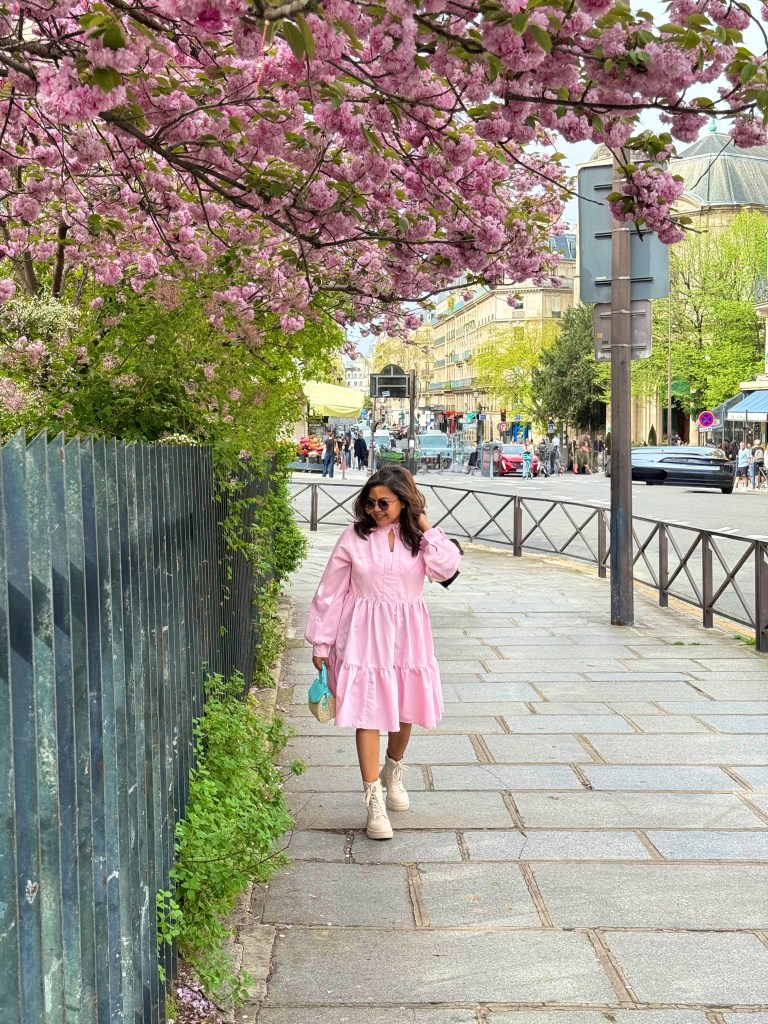
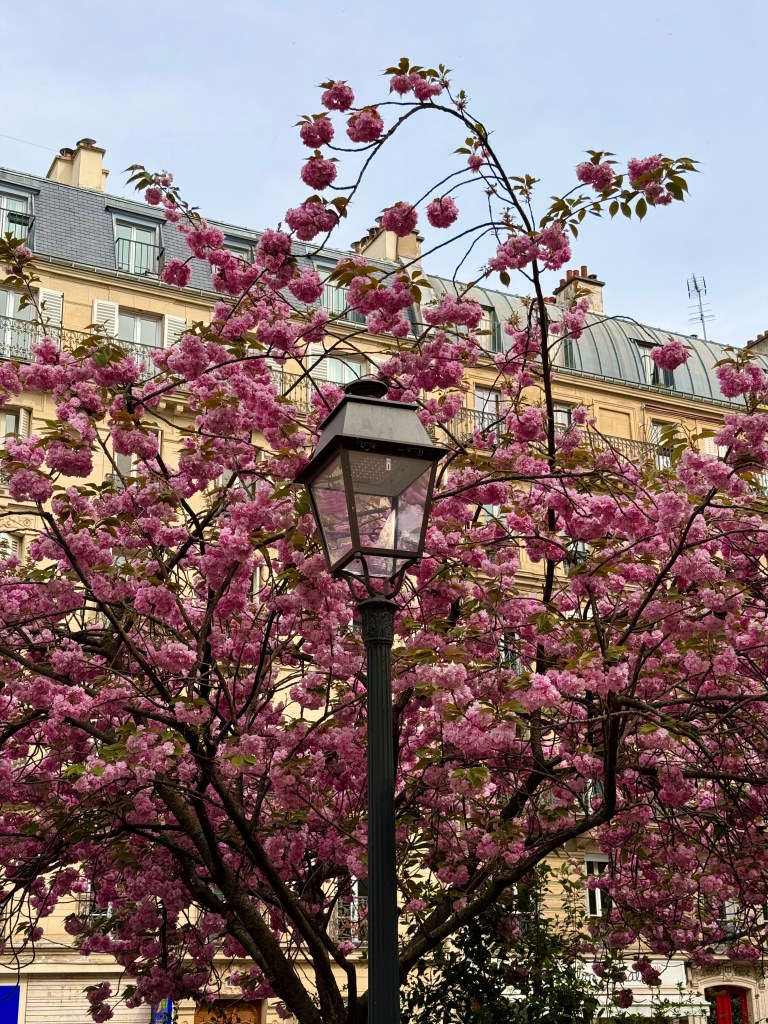
Nestled in the heart of the 5th Arrondissement in Paris, this lovely park offers a tranquil escape from the bustling city. Free from the usual tourist crowds, you’ll find locals basking in the sun beneath the blooming cherry blossoms. The park is dotted with numerous benches, perfect for relaxing and soaking in the serene atmosphere. While it wasn’t exactly empty during my visit—many locals were enjoying the space, some even celebrating birthdays—the scene might be quieter if you visit in the morning. The soft pink hues of the cherry blossoms create a stunning contrast against the stately charm of the surrounding architecture.
Best time: Beginning of April
Location: Square Paul Langevin

Two cherry blossom trees stand tall in front of the world-famous bookstore, Shakespeare and Company. Located just beside Notre-Dame in Paris, this bookstore, which opened in 1951, is extremely popular among tourists. The bookstore itself is quite beautiful, and with the cherry blossoms in full bloom, it looks even more stunning. However, this place is notorious for being crowded with tourists—inside the shop, outside the shop, and in the café. I’ve never found it empty, as I could never wake up early enough. However, I’ve seen pictures showing that early in the morning, the road in front is not crowded, and it looks magical in the morning sun.
Best time: End of March to Beginning of April
Location: Shakespeare and Company
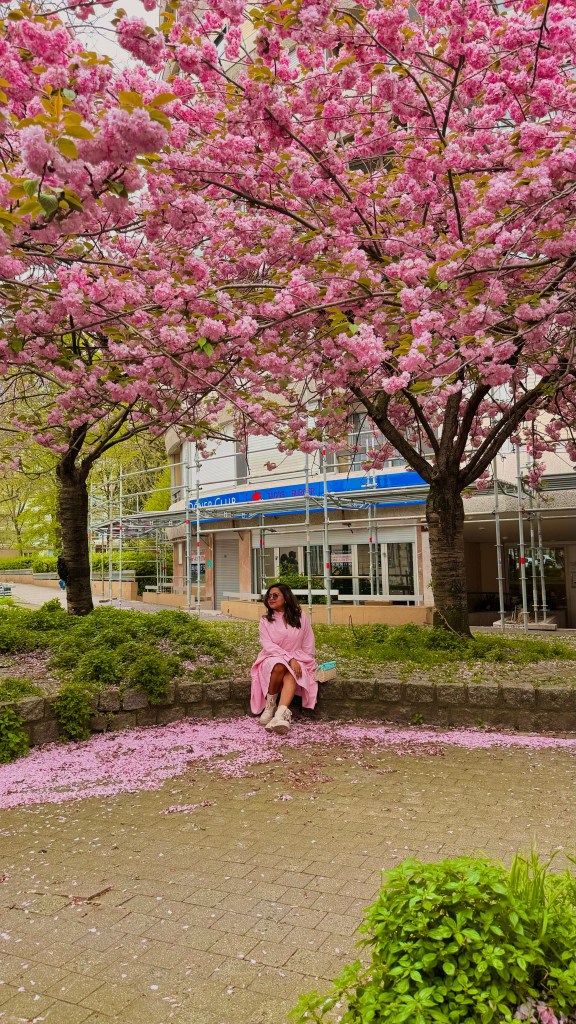
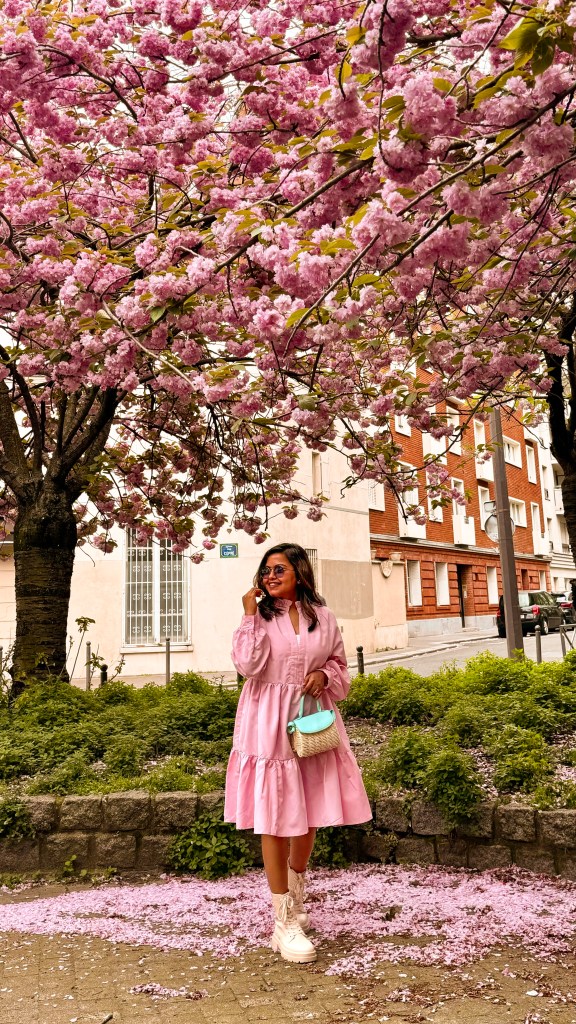
This hidden gem in Paris, an unnamed square, is a true delight covered in cherry blossoms. Nestled in the 16th Arrondissement, I stumbled upon it while traveling on Metro Line 6, right beside the Cambronne metro stop. Although the surrounding residential buildings may not be particularly picturesque, the square itself is absolutely stunning when in bloom. A cluster of 13 trees creates a magnificent pink canopy. While there are no benches to sit and linger, the beauty of this place makes it worth a visit, even if just for a short while. It truly is one of the best squares in Paris.
Best time: End of March to First week of April
Location: 16 Boulevard Garibaldi
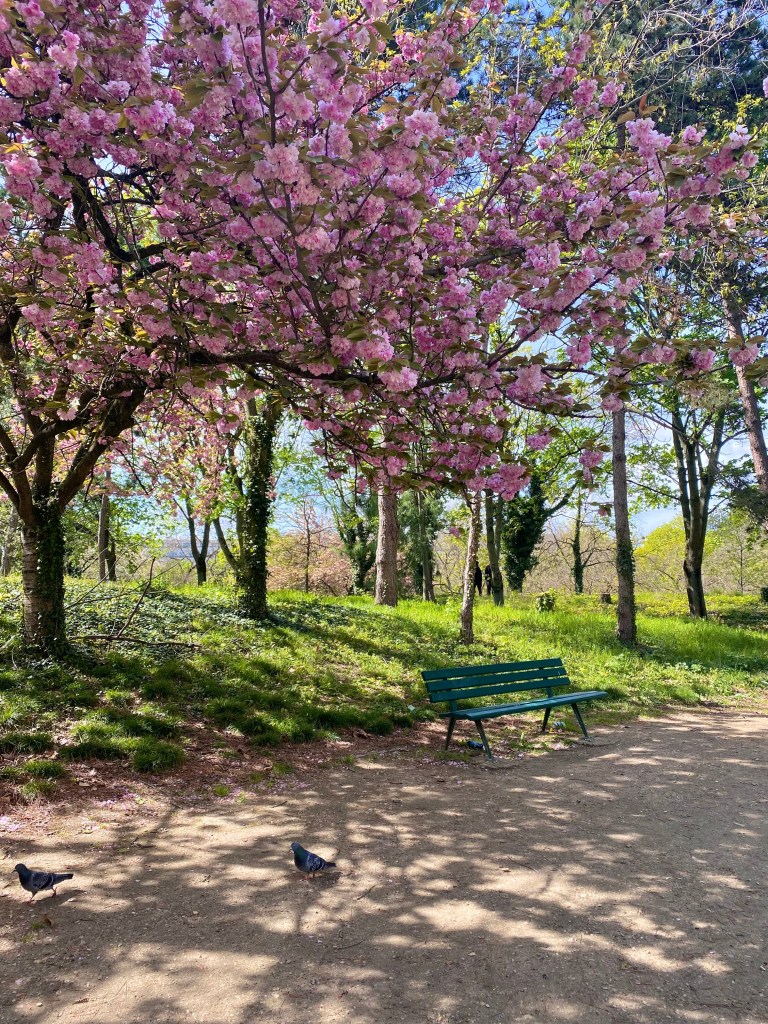
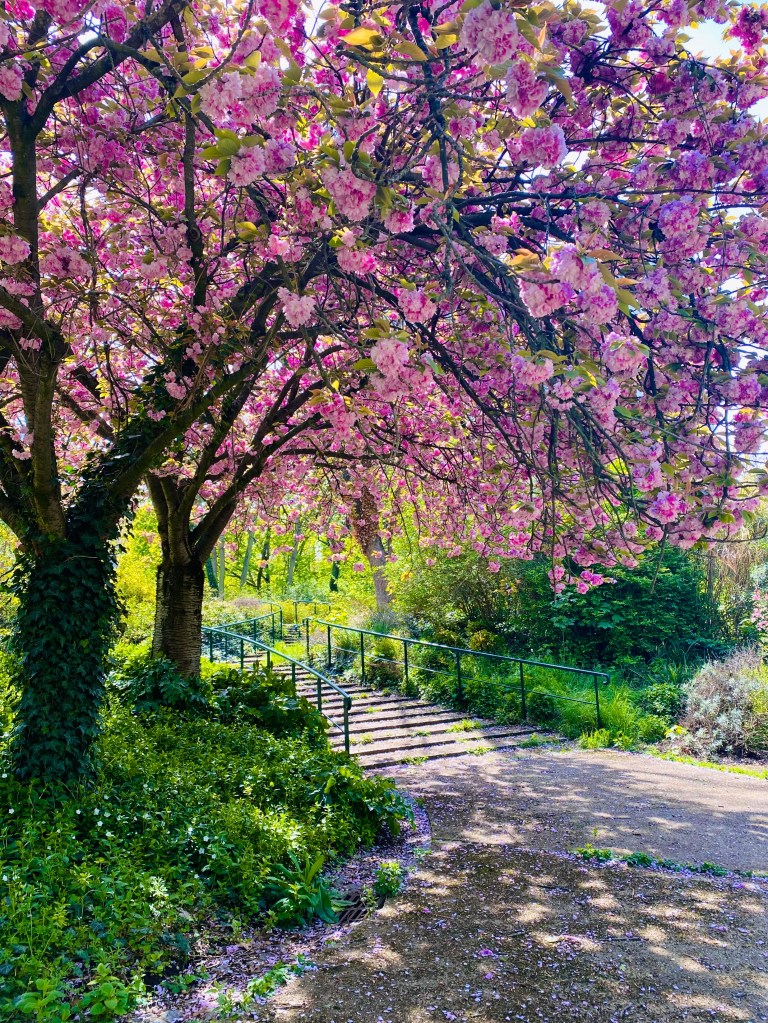
This park may not be one of the most famous in Paris, but when it comes to cherry blossoms, it should not be overlooked. Throughout the park, many gorgeous cherry blossom trees are scattered, creating a stunning display. My favorite ones are shown in the pictures. Additionally, this park is not a touristy spot, so you can enjoy a peaceful time sitting on the benches beneath the cherry blossoms.
Best time: Beginning of April to Mid of April
Location: Parc Suzane Langlen
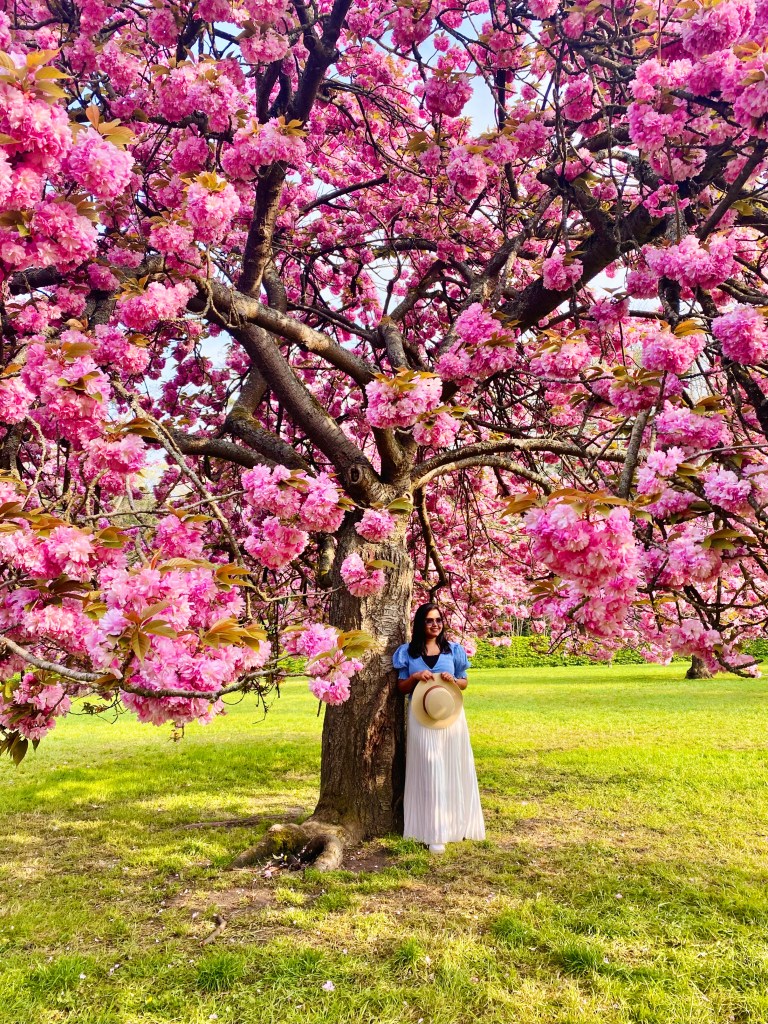

Parc des Sceaux, located in the southern suburbs of Paris, is just a 30-minute ride on the RER B from Châtelet les Halles. Contrary to popular opinion, you don’t need an entire day to visit—unless you plan to spend the day picnicking or relaxing in the park. A few hours are sufficient to enjoy this beautiful spot. It is arguably the best place in Paris to see cherry blossoms. When the trees are in full bloom, the park is nothing short of magical. For a peaceful experience or a photoshoot, it’s best to visit early in the morning and if possible on weekdays. The park is a favorite among the local Asian community and Parisians, who come here to celebrate Hanami under the Sakura.
Cherry blossom here starts blooming much later than rest of the places in Paris, as it is planted in a way so that blooming season coincide with the the Hanami Festival. So, if you are visiting Paris later part of the Spring you can still get a glimpse of cherry blossom at this park.
Best time: From mid April to end of April
Location: Parc des Sceaux

Caught in a love affair with Marrakech’s chaos and calm; its bustling markets, tranquil gardens, and the enchanting call to prayer at sunset. A city that has everything.
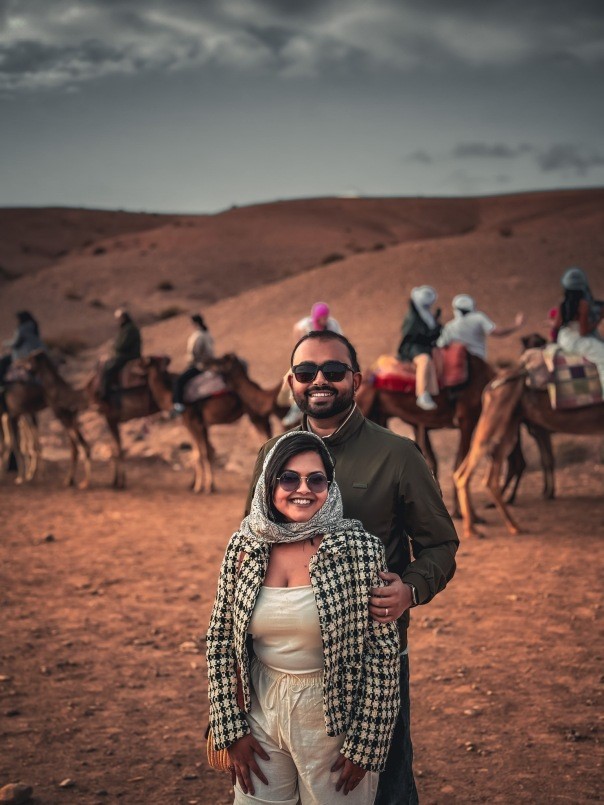
This year, for our anniversary, we journeyed to the vibrant and enchanting city of Marrakech. Nestled in the central areas of Morocco, Marrakech sits near the majestic Atlas Mountains and the doorstep of the awe-inspiring Sahara Desert, just 100 kilometers away. The city boasts a fascinating duality, distinctly divided into two areas: the historic medina, a maze of timeless charm enclosed by ancient walls, adorned with striking clay-colored architecture that exudes warmth and history, and the more modern, cosmopolitan neighborhoods, teeming with energy and life.
The Medina of Marrakech is a UNESCO World Heritage site and the historic heart of the city, offering an enthralling blend of sights, sounds, and aromas that transport visitors to a bygone era. Encircled by ancient ochre walls, the medina is a labyrinth of narrow, winding alleys, where history meets the vibrant energy of daily life. Traditional clay-colored buildings, adorned with intricate patterns and decorative details, create an unforgettable sense of place, while bustling squares and courtyards punctuate the maze-like streets.
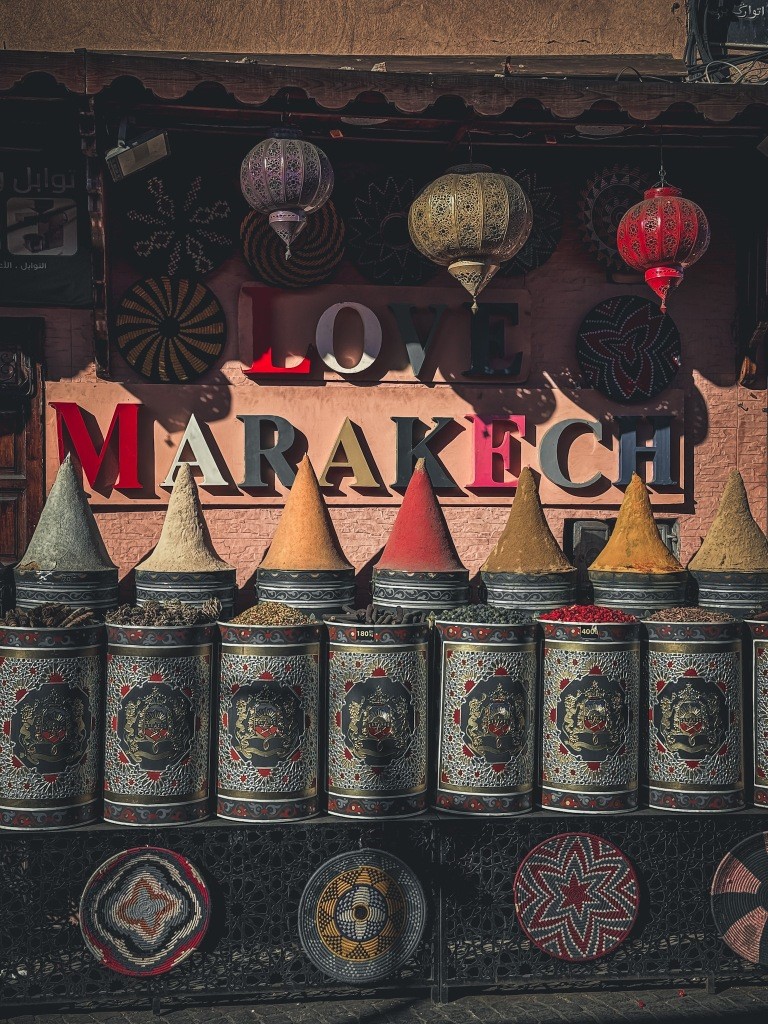
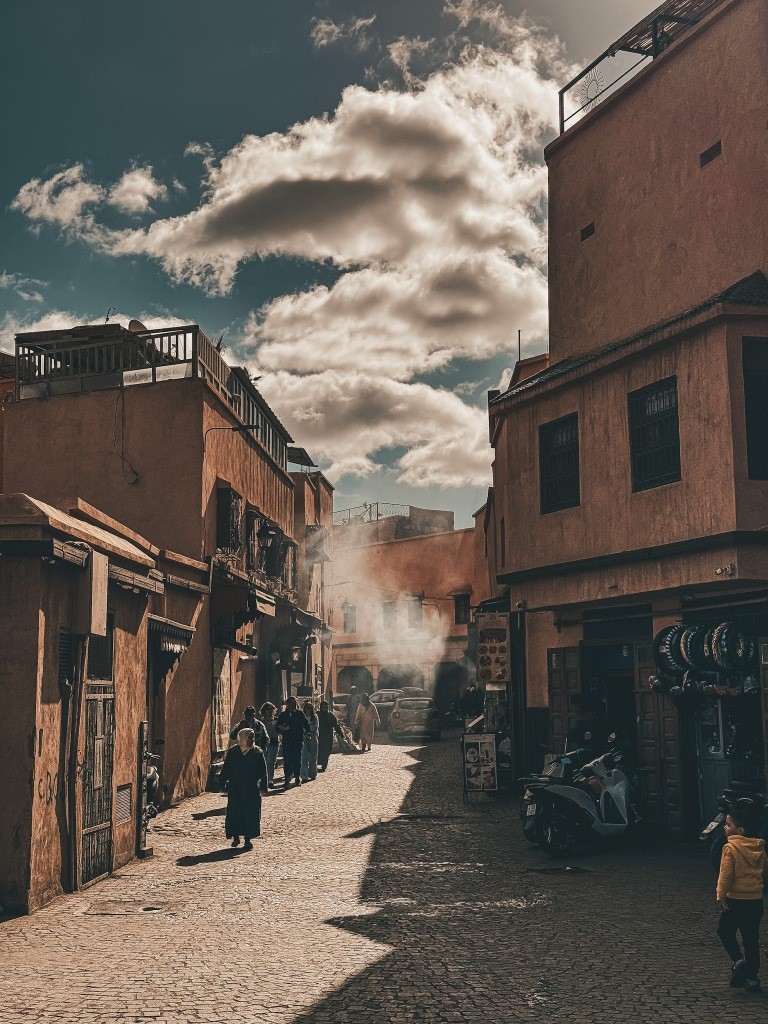
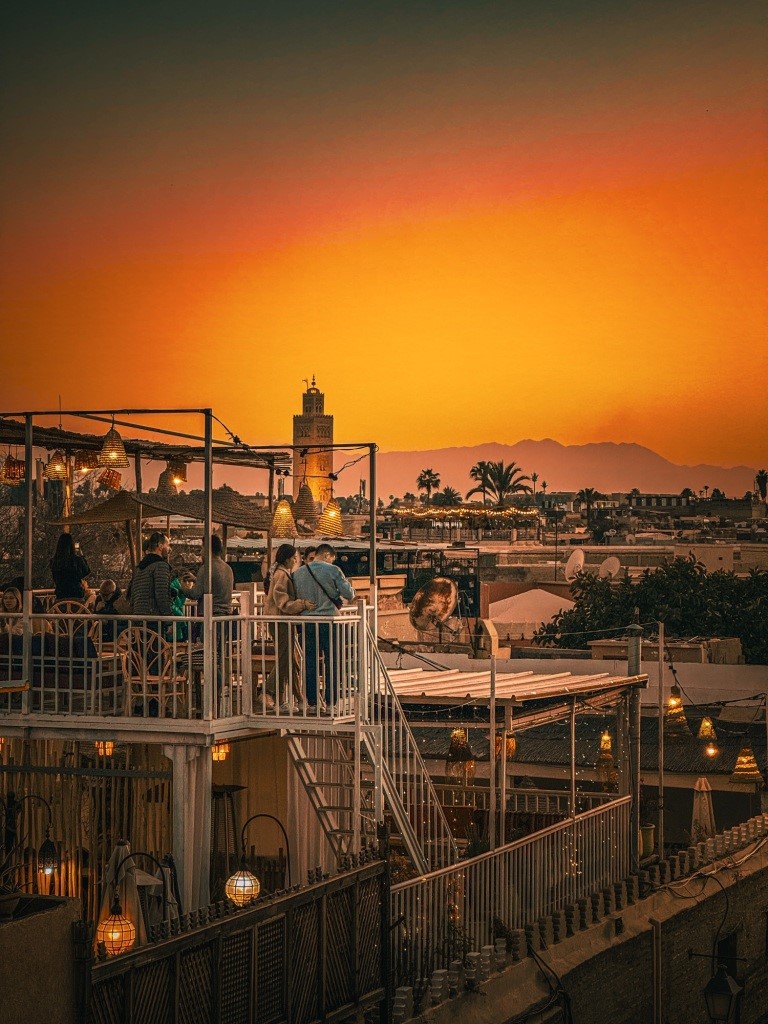
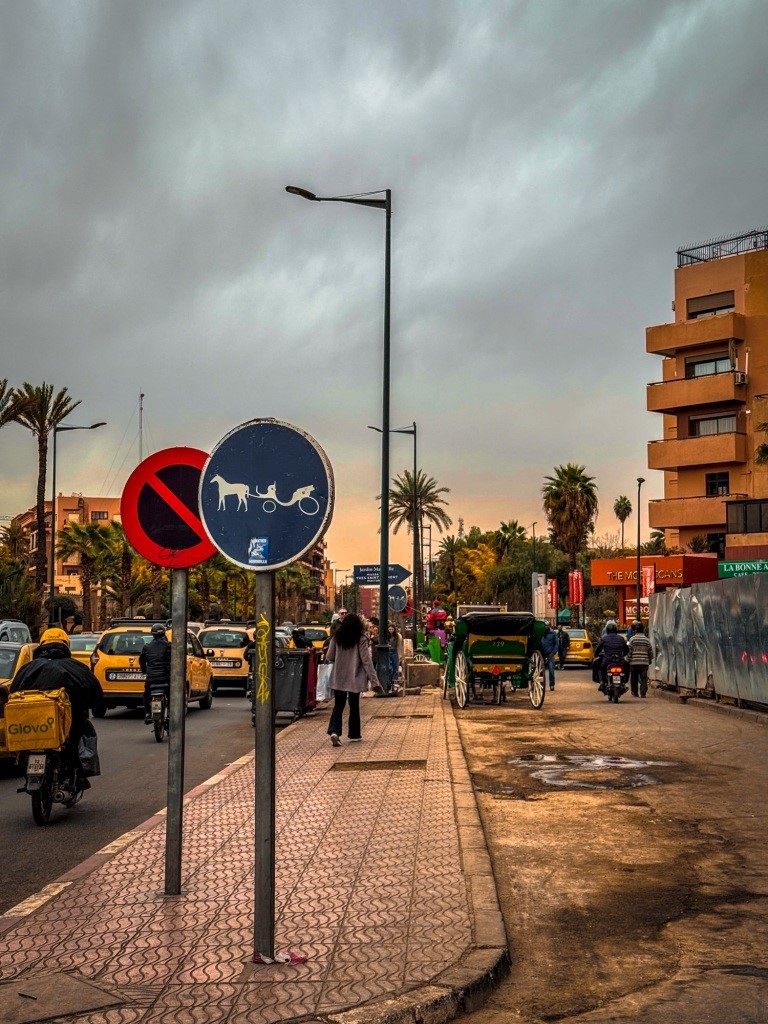
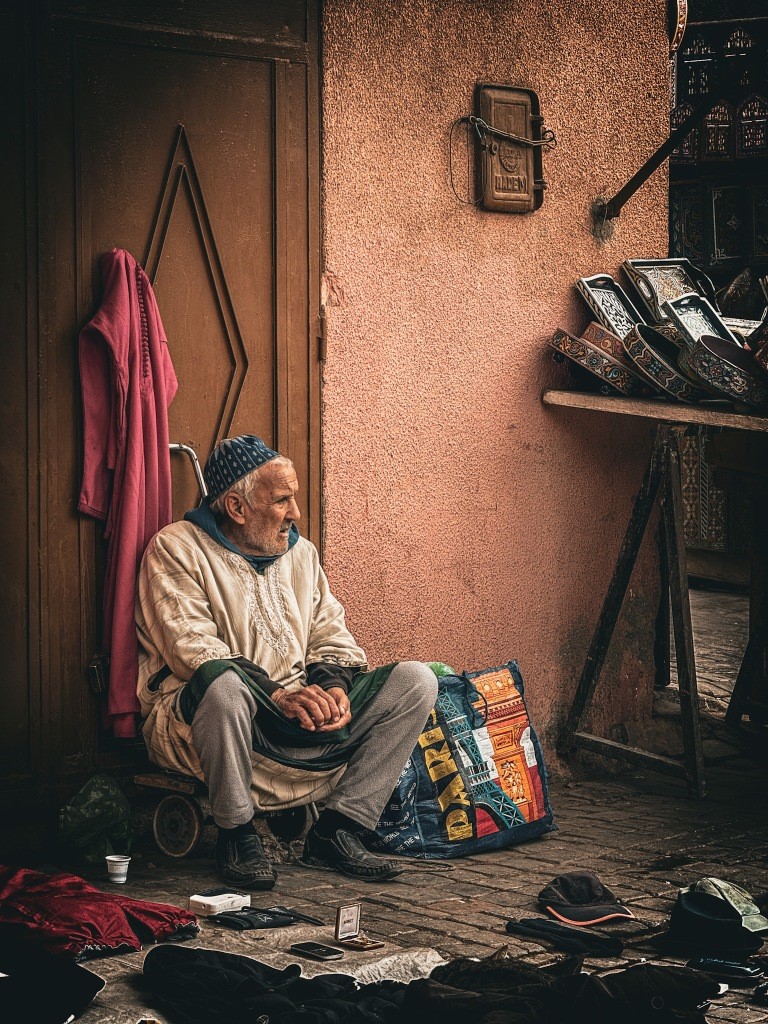
At the very soul of the Medina are its world-famous souks. These traditional marketplaces are a sensory feast, brimming with color and activity. Each souk is dedicated to a different craft or product—lanterns and leatherwork, spices and carpets, jewelry and ceramics—displaying the artisanal expertise that has been passed down through generations. The air is filled with the tantalizing aromas of spices like saffron, cumin, and cinnamon, while the vibrant stalls are a kaleidoscope of textures and hues.
Place des Epices
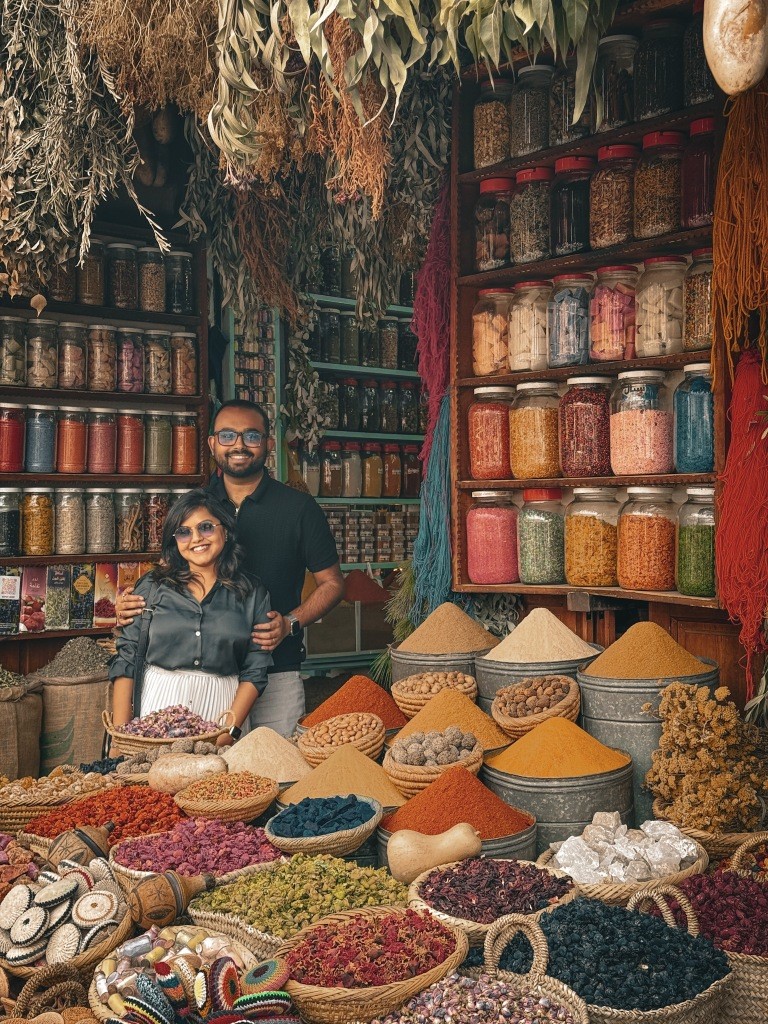

Exploring the souks is an adventure in itself, with the chance to haggle over treasures, watch skilled craftsmen at work, or simply marvel at the lively atmosphere. The iconic Souk Semmarine, with its dazzling displays of textiles and traditional clothing, is a must-visit, as is the Souk Haddadine, known for its blacksmiths creating intricate metalwork. Beyond shopping, the souks also offer a glimpse into the cultural and social fabric of Marrakech, where the rhythms of daily life unfold amidst the lively exchanges between locals and visitors alike.
The Medina of Marrakech and its souks are much more than places to visit—they’re an experience of immersion in Morocco’s rich heritage and timeless charm.
To visit Morocco, you will need a visa, unless you are a citizen of the Australia, Canada, European Union, Hong-Kong, Japan, Malaysia ,Kazakhstan, UK and USA. For the rest of the world, you will either need a visa, or e-visa depending on your nationality. You can go to this link and check if you need a visa or not.
For citizens of India, e-visa application procedure is quite simple and costs a mere 795 MAD (this is for December 2024). Follow this link here, and all you need to fill in are certain details and pay the fees. The e-visa is issued within a couple of working days. So, even if you want a plan a quick trip, Morocco is the place.
In Morocco, the currency is Moroccan Dirham (MAD). However, locals accept Euros ( € ) at the exchange rate of 1€ = 10 MAD. Since MAD is a closed currency (not available outside Morocco), it is always suggested to exchange your currency for some dirhams when you fly into Marrakech (or any other city for that matter). Airports and cities are well-equipped with numerous currency exchange counters for your convenience. Alternatively, there is a practical alternative worth considering.
If you have applications like Revolut or TransferWise, you can conveniently deposit funds into a Moroccan Dirham (MAD) account and withdraw cash from the numerous ATMs scattered throughout the city. Keep in mind that most ATMs charge a fee of approximately 30 MAD per transaction. To avoid extra charges, it’s a good idea to carry an ample amount of local currency before venturing into the souks for your explorations.
Staying connected while traveling to Marrakech is easier than ever, thanks to international roaming and eSIM options. While many mobile providers offer international roaming plans, these can often be expensive and may not provide the best value for short trips. A more convenient and cost-effective alternative is using an eSIM. These can be purchased online before your trip and activated instantly. Just make sure your smartphone is eSIM-compatible before making the switch. Since we had Revolut, we took advantage of their e-SIM offer, which was quite economical for us. A 28 days validity with 5 GB of data costed us around 15 Euros.
Arabic is the official language, but French is widely spoken. So if you know either of these two, you are all set. However, if you are not familiar with either, do not worry, English is commonly understood in the tourist areas. Just remember to start your conversation with a “Salam Alaikum” (Hello) and end with a “Shukran” (Thank you).
Getting around in Marrakech is an adventure in itself, with a mix of traditional and modern transportation options. Within the Medina, walking is the best way to explore its narrow, winding streets, though it’s easy to lose your way in its maze-like layout—having a map or hiring a licensed guide can save time and stress. For longer distances, the yellow taxis are a convenient choice, but always agree on a fare before starting your journey, as meters are rarely used. While Marrakech is generally safe, tourists should stay vigilant against common scams, such as overly persistent “guides” who offer unsolicited assistance or inflated prices for goods and services. A firm but polite “La shukran” (No, thank you) can help defuse unwanted attention.
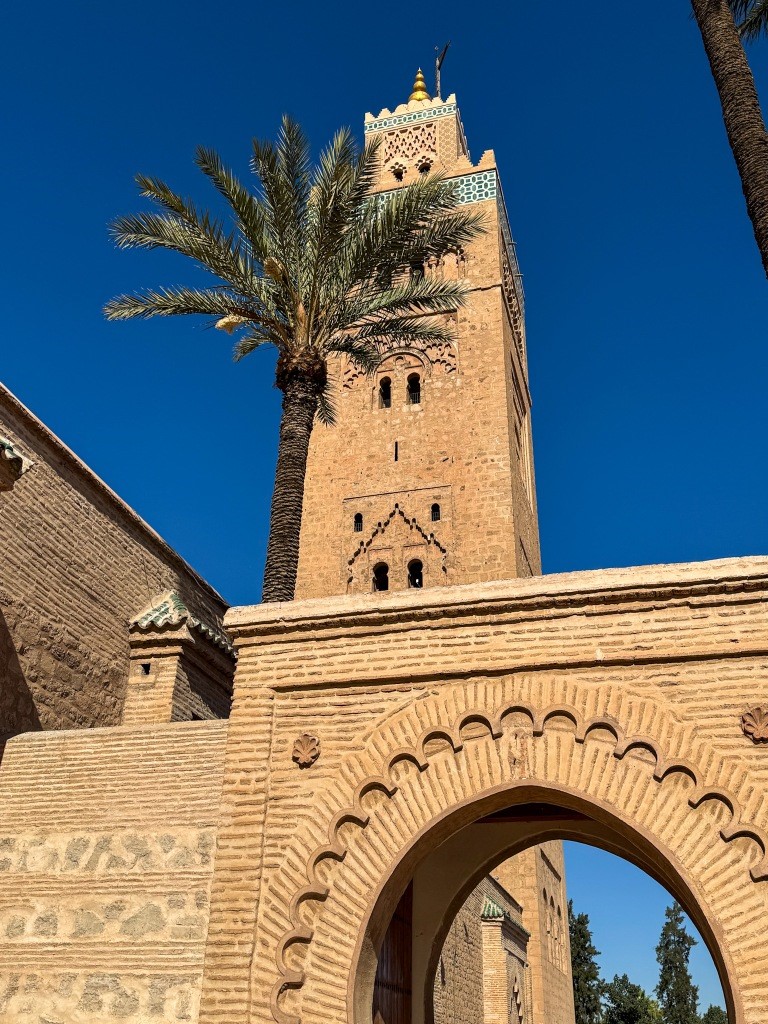
Religious practices are an integral part of daily life in Marrakech, and visitors will undoubtedly notice the strong presence of Islam throughout the city. The call to prayer echoes five times a day from the city’s mosques, creating a serene rhythm that punctuates daily activities. It is important for visitors to be respectful of prayer times, especially in more traditional areas, and to dress modestly when exploring the Medina or visiting religious sites. Non-Muslims are generally not allowed to enter mosques in Marrakech, but the stunning architecture of Marrakech mosques, such as the Koutoubia Mosque, the Ben Youssef mosque and the Kasbah mosque can still be admired from the outside.

Summers, from June to August, can be scorching, with temperatures often exceeding 40°C (104°F), making it less ideal for extensive outdoor exploration. Winters, from December to February, are mild and pleasant, with daytime temperatures averaging around 20°C (68°F), though evenings can be chilly. Spring (March to May) and autumn (September to November) are considered the best times to visit, offering comfortably warm days and cooler nights. These seasons are perfect for exploring the Medina, enjoying rooftop dining, and venturing to nearby attractions like the Atlas Mountains. Regardless of the season, it’s wise to pack layers, as temperatures can fluctuate dramatically between day and night.
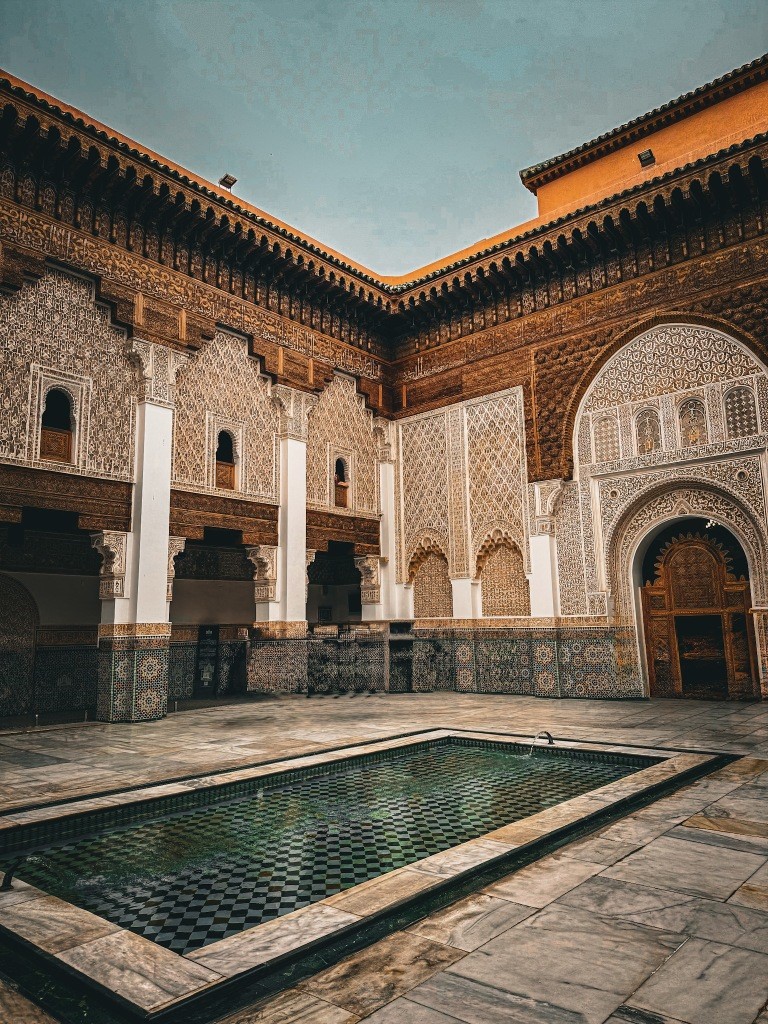
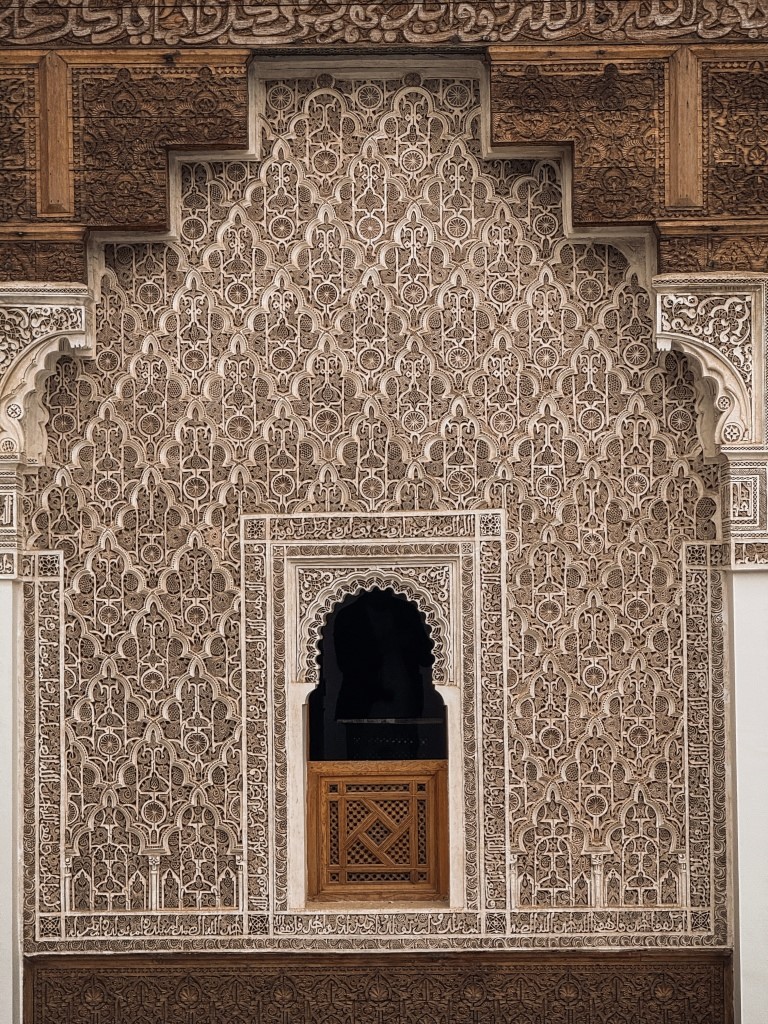
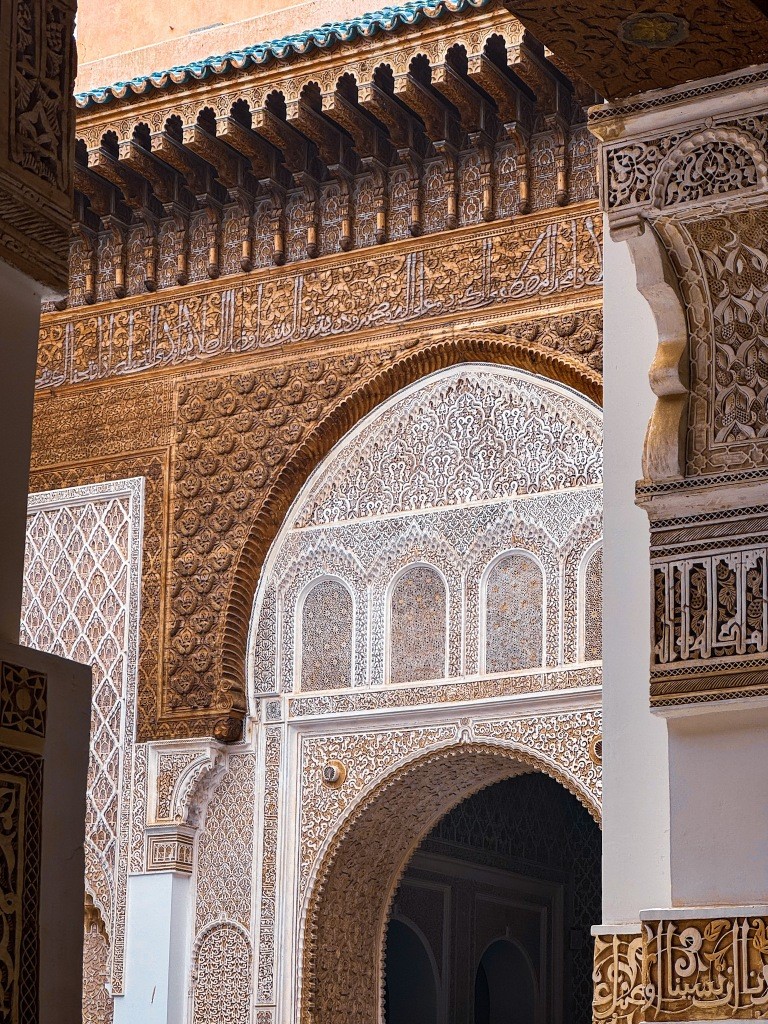
Nestled in the heart of Marrakech’s Medina, the Ben Youssef Madrasa is a stunning testament to Morocco’s rich history, artistry, and cultural heritage. Once the largest Islamic college in North Africa, it now serves as one of the most visited landmarks in Marrakech, enchanting visitors with its architectural beauty and serene ambiance.
Opening hours : 9 am to 5 pm
Ticket prices : 50 MAD (pay at the counter)

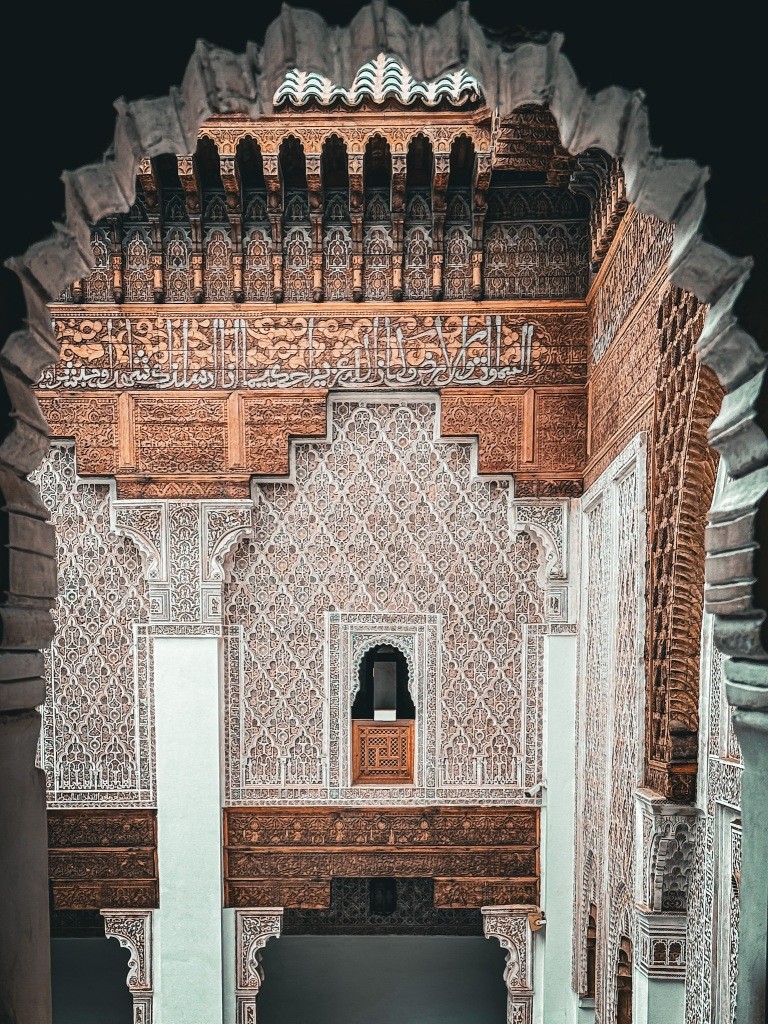
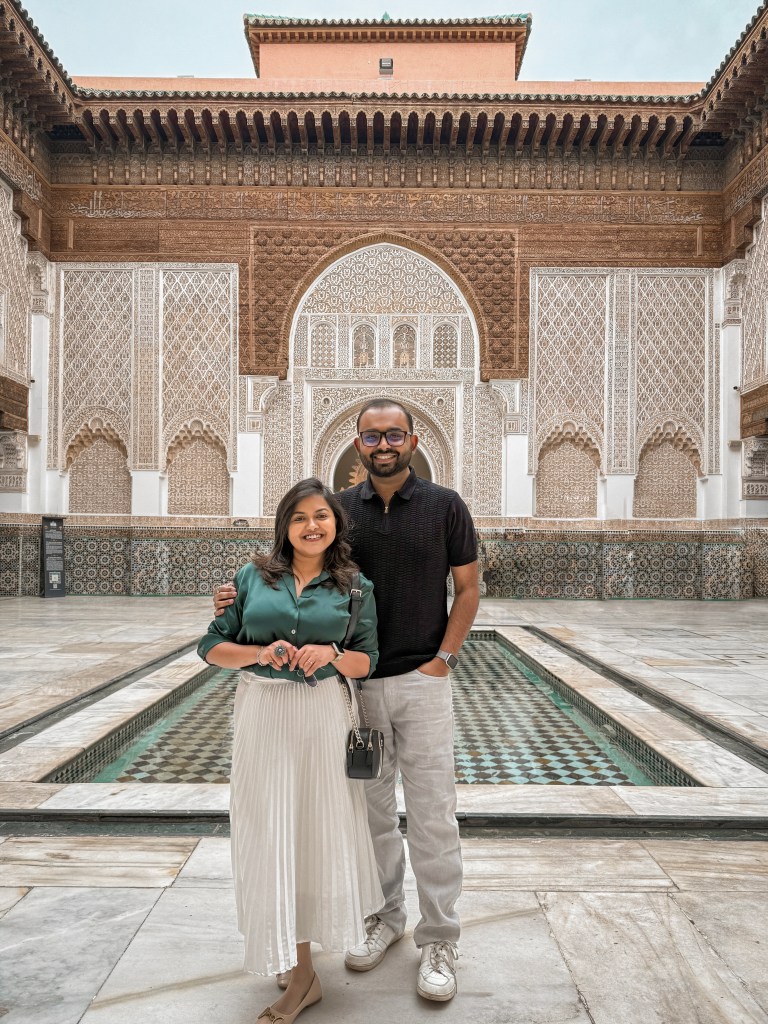
The palace was commissioned by the sultan in 19th century as a residence for his family. It is an elaborate complex of over 150 rooms, courtyards and gardens. A visit here transports you to an era of opulence, power, and artistry.
Opening hours : 9 am to 5 pm
Ticket prices : 70 MAD

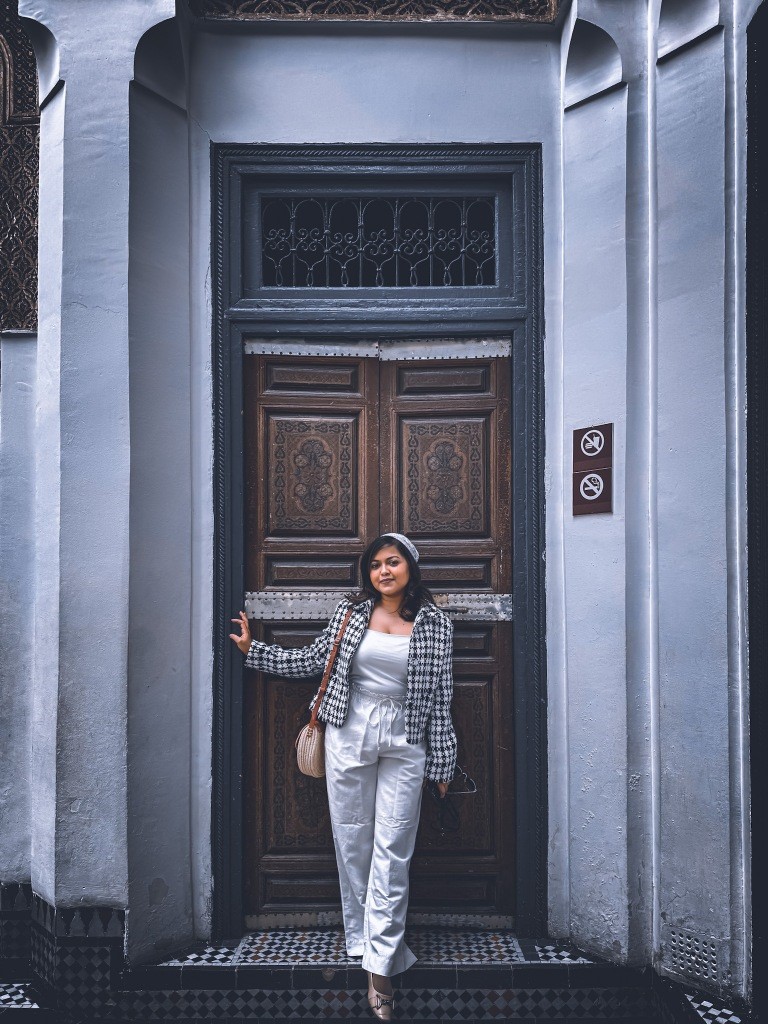

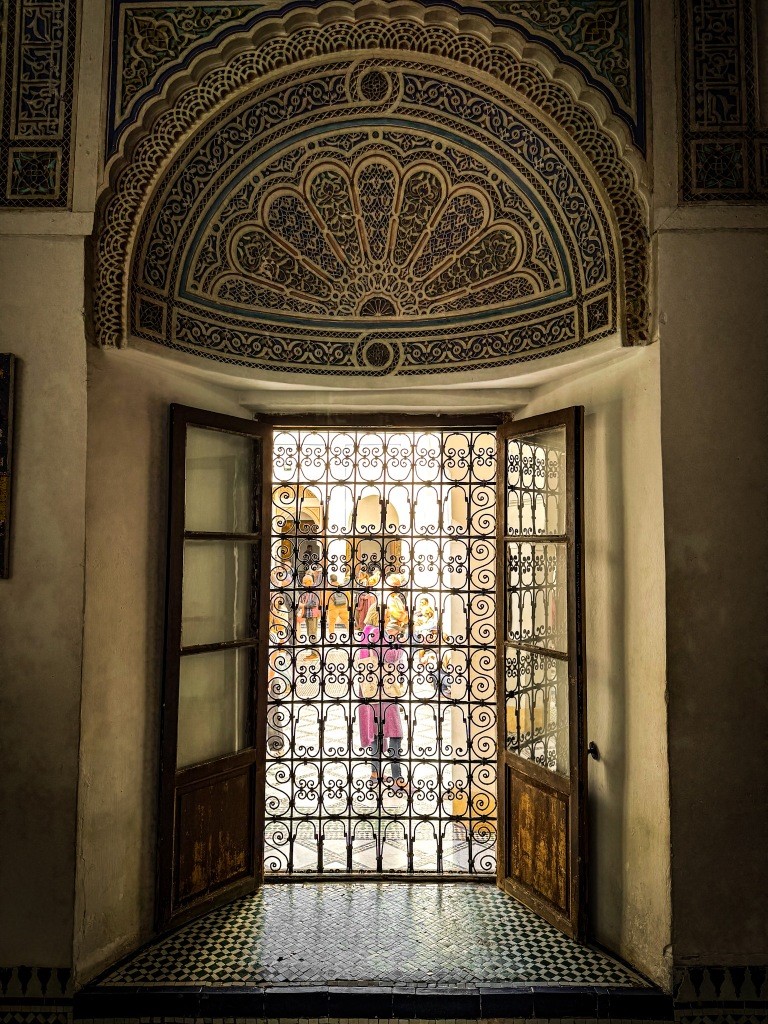

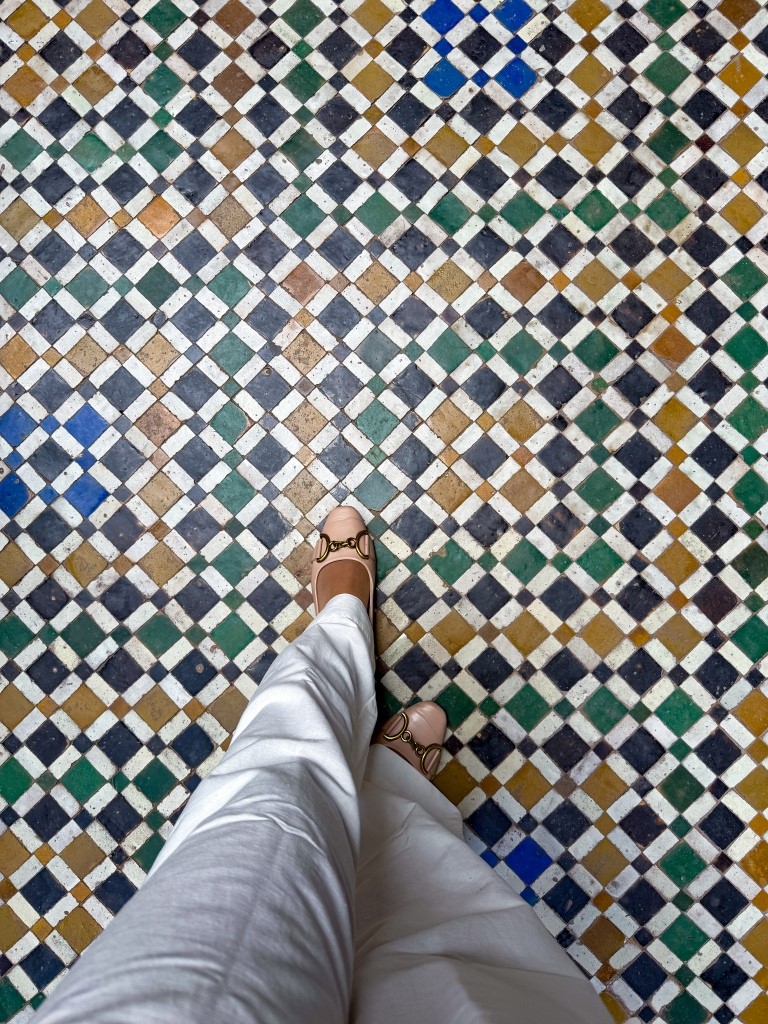
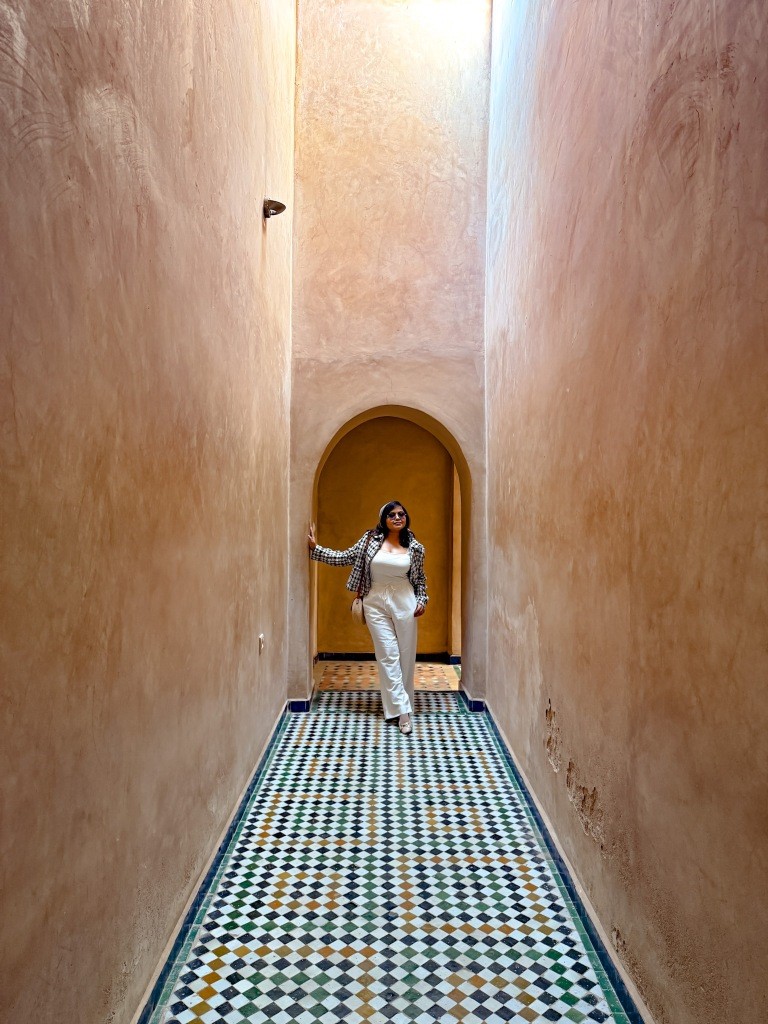
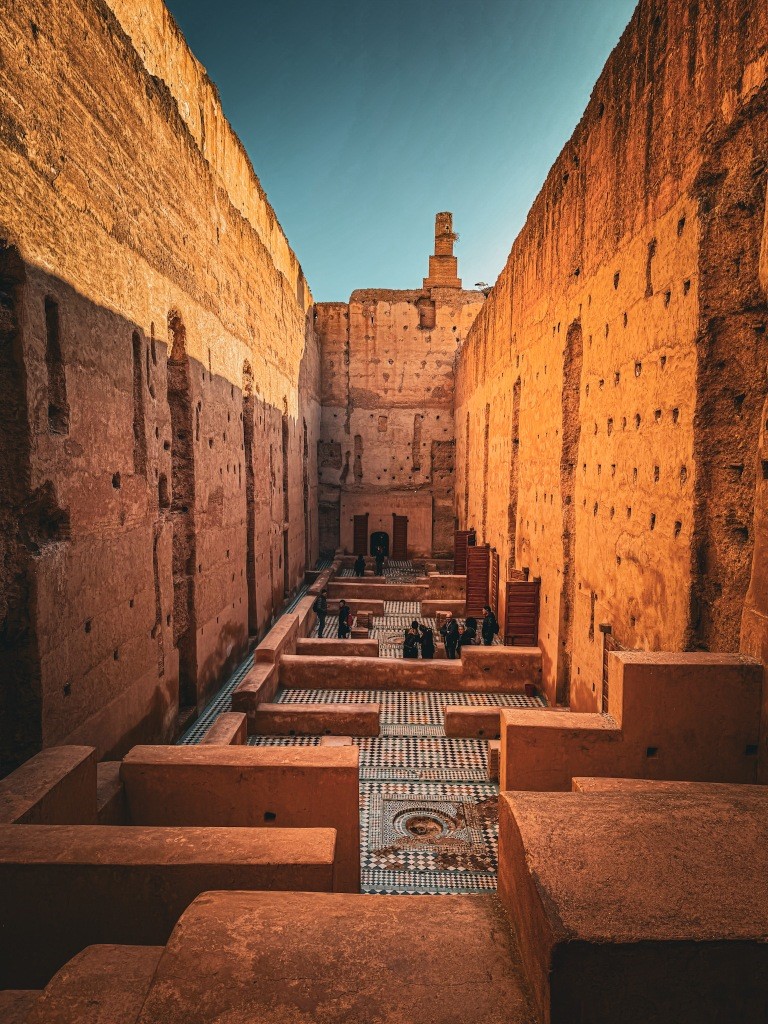
Built in the late 16th century by Sultan Ahmad al-Mansur of the Saadian dynasty, the palace was designed to showcase the wealth and power amassed after the Portuguese defeat at the Battle of the Three Kings.
Opening hours : 9 am to 5 pm
Ticket prices : 100 MAD


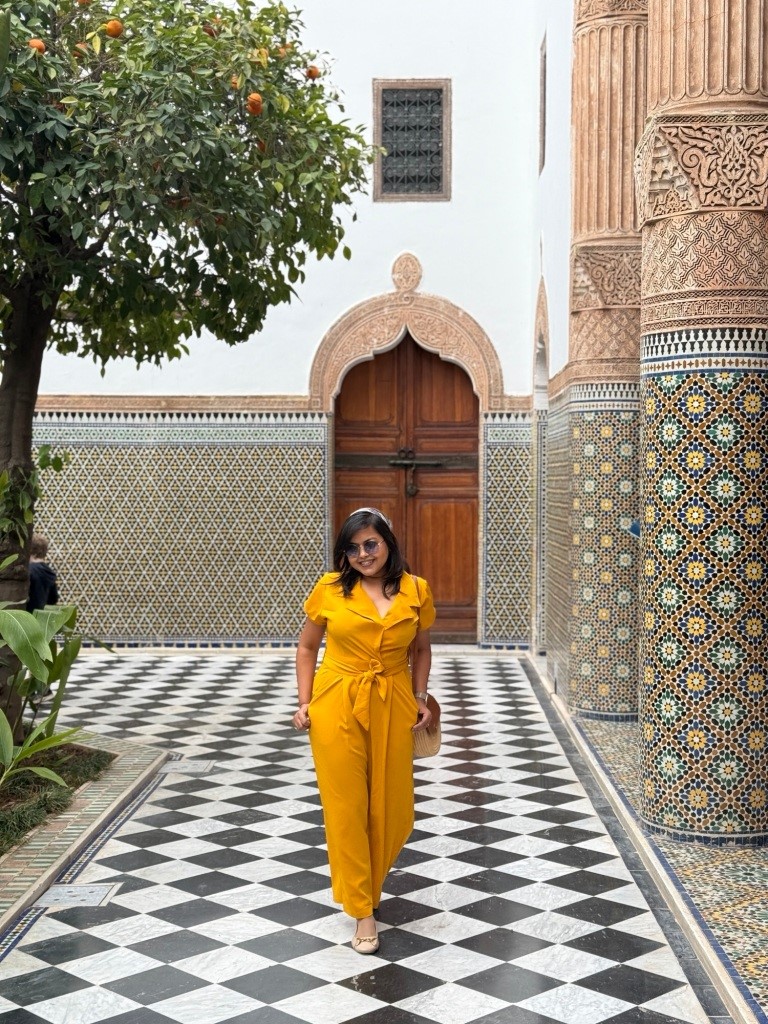
Known as the “House of the Pasha,” it once served as the residence of Thami El Glaoui, the powerful Pasha of Marrakech during the early 20th century. Today, it stands as a beautifully restored cultural gem that invites visitors to step into a world of elegance and heritage. They have a beautiful cafe as well, called the Bacha cafe, however the waiting times are on an average 2-3 hours. So it is suggested to enregister your names at the cafe when you enter, and explore the rest of the place in the meantime.
Opening hours : 10 am to 6 pm
Ticket prices : 70 MAD
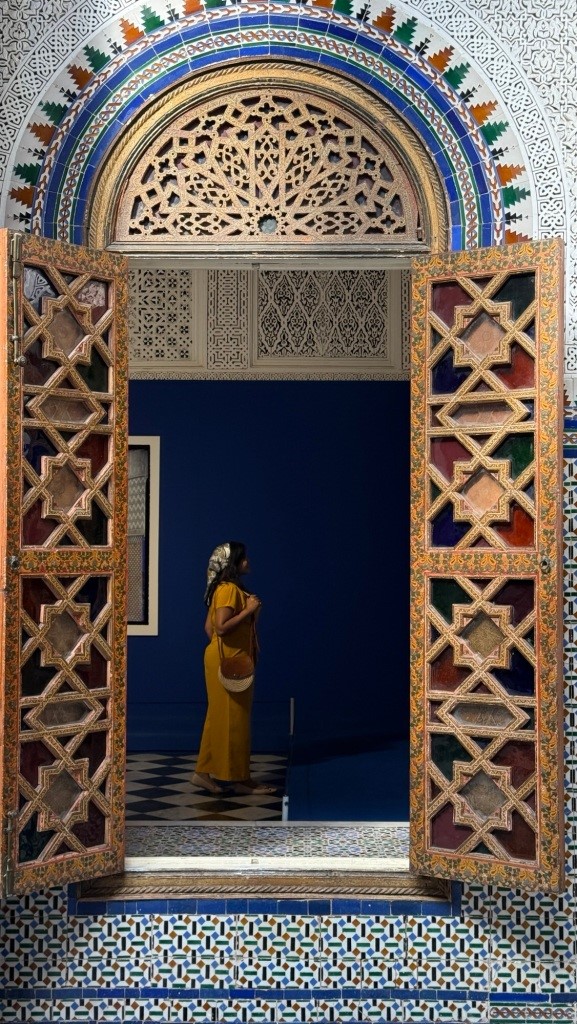
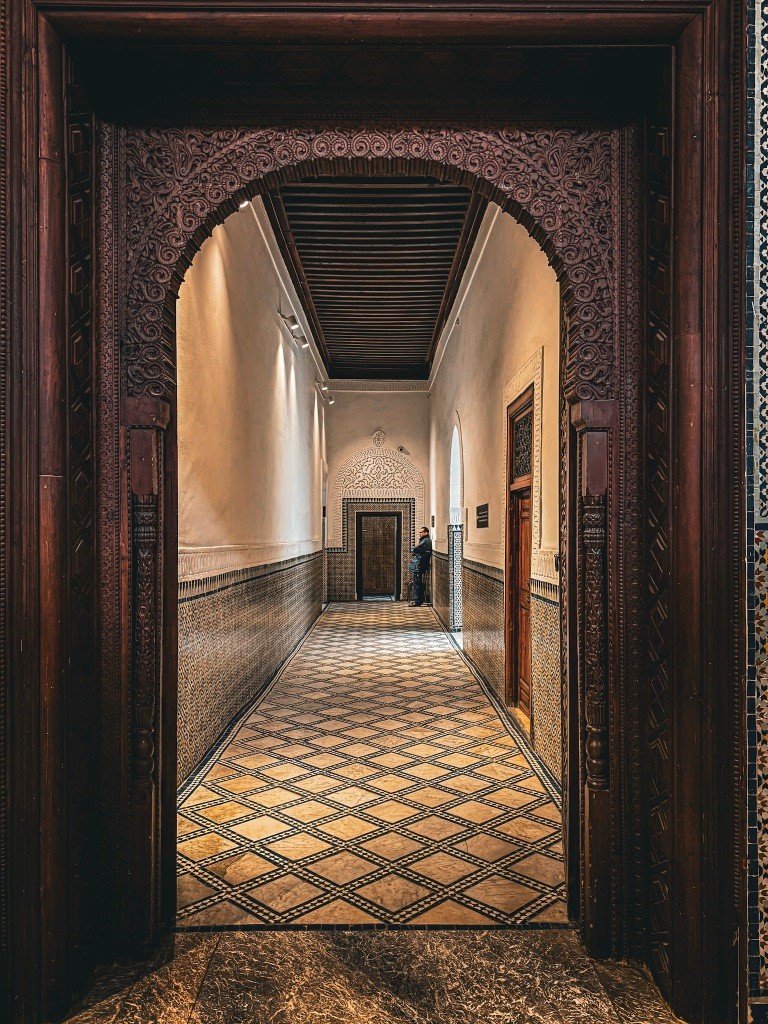
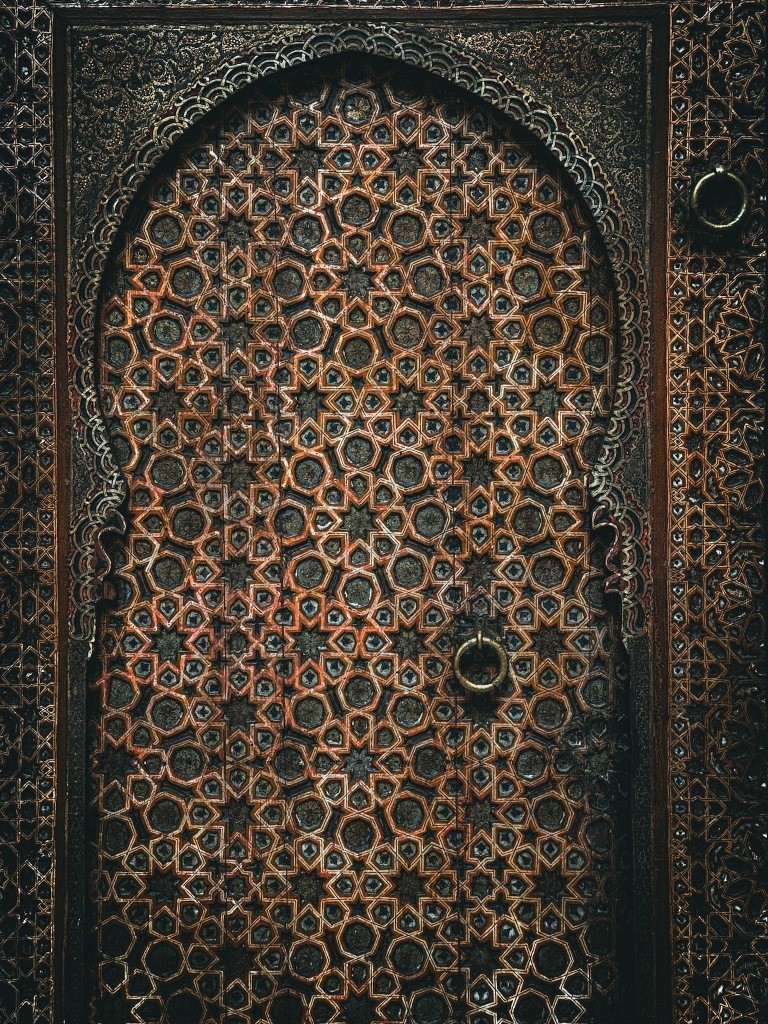
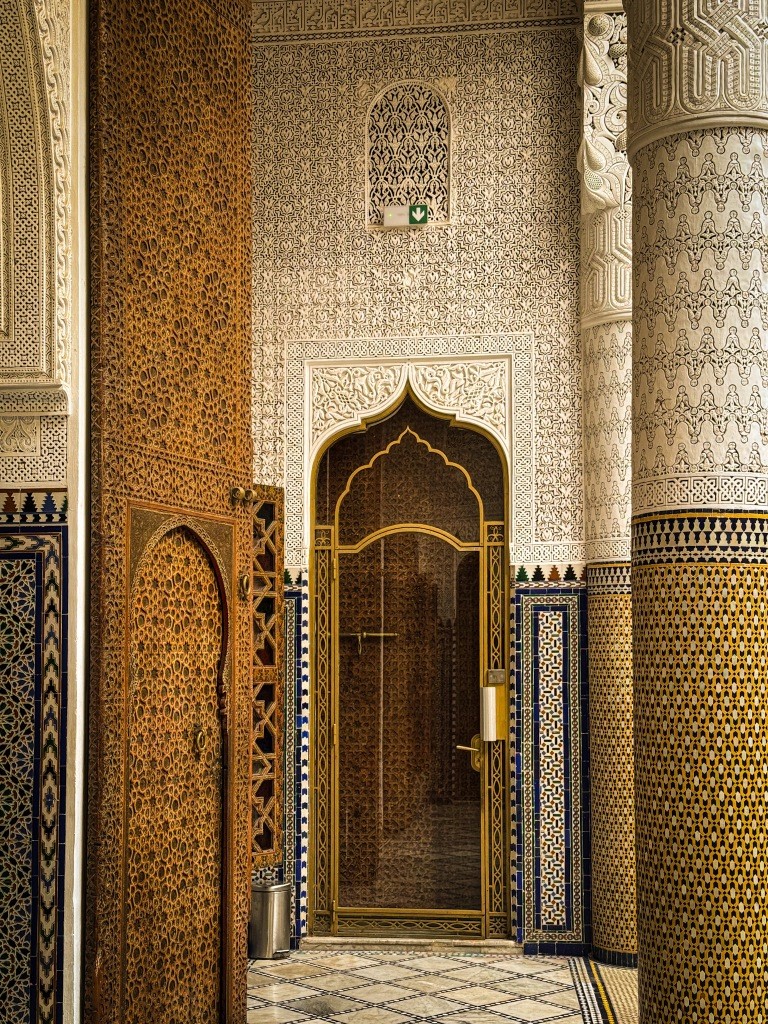
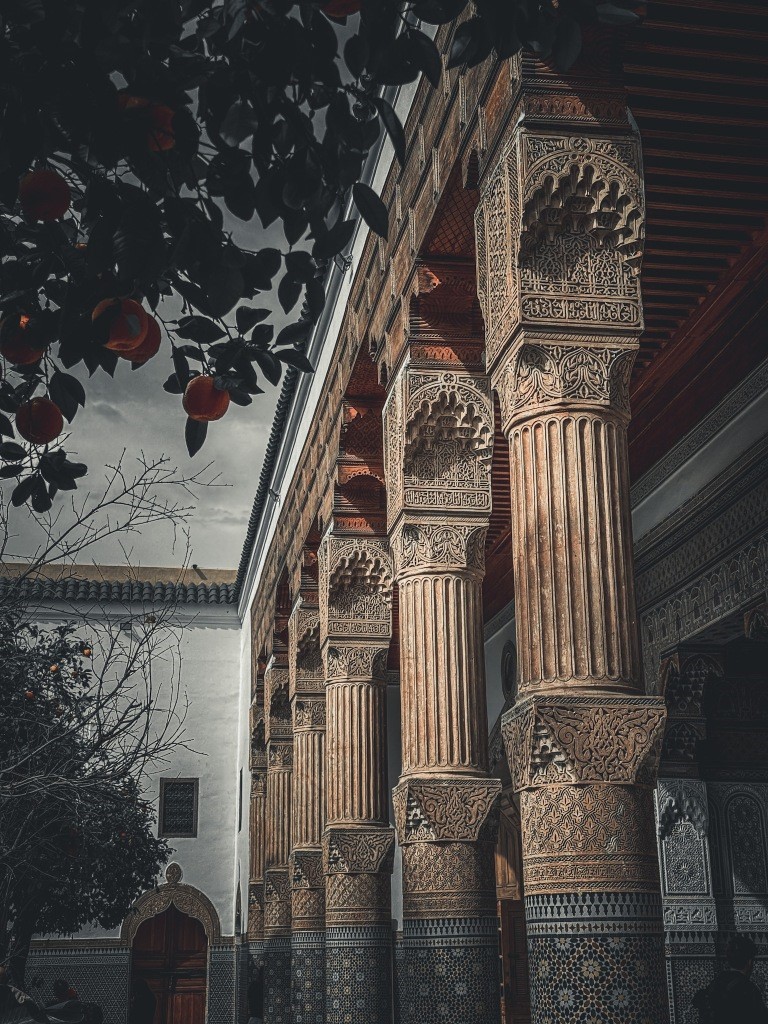
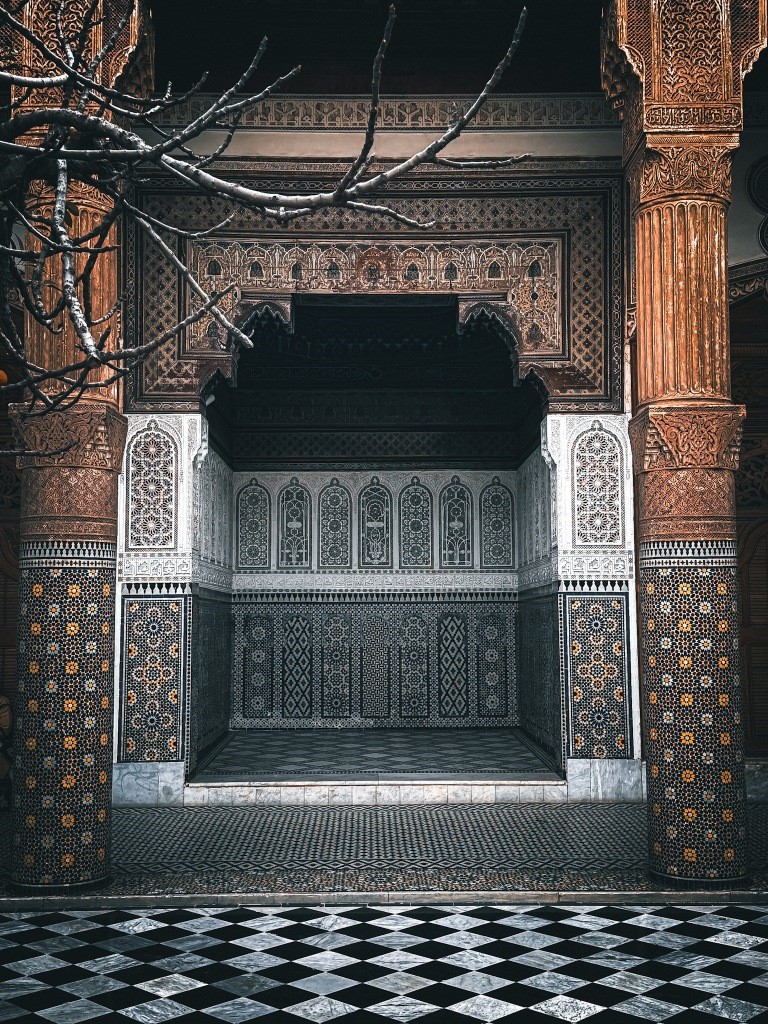
One of Marrakech’s most iconic landmarks, is a serene and vibrant garden that offers a tranquil escape from the bustling city. The tickets are sold in slots for each day, with limited number of tickets for each slot. We recommend to plan the visit to this garden some days in advance. You can book the tickets from their official website.
Opening hours : 8 am to 5 pm
Ticket prices : 170 MAD
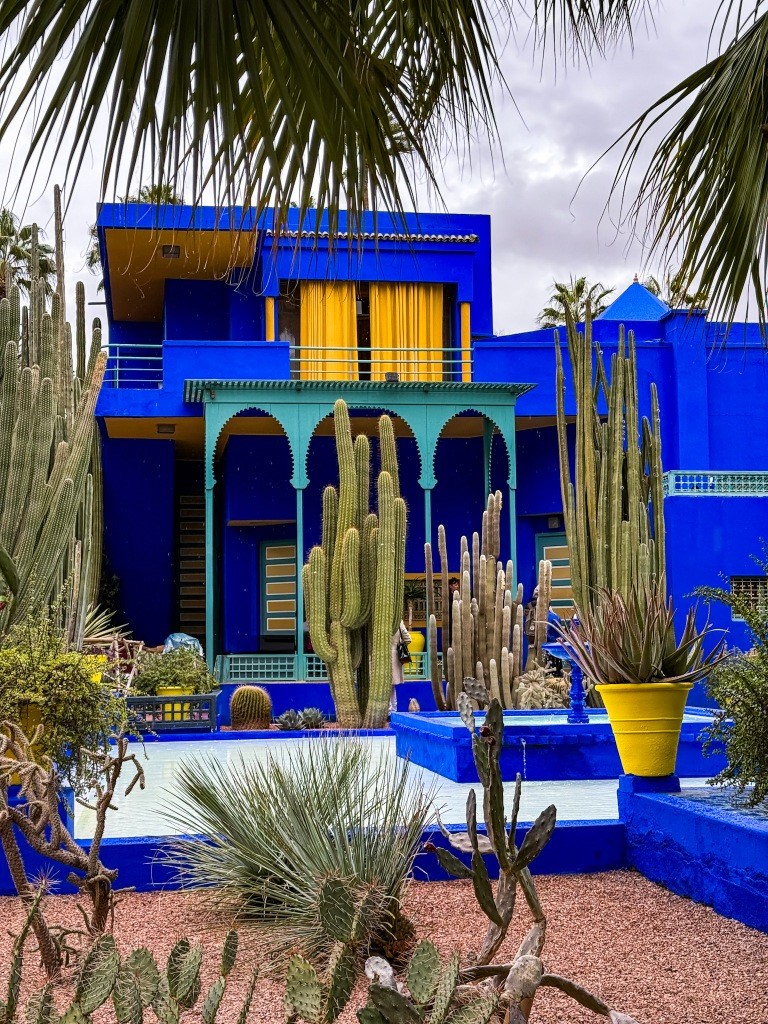
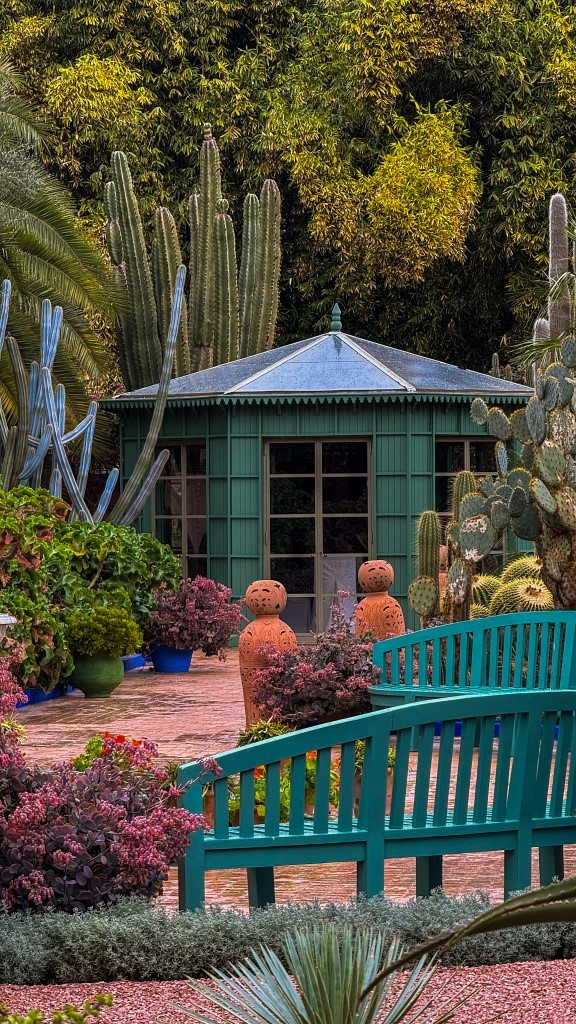
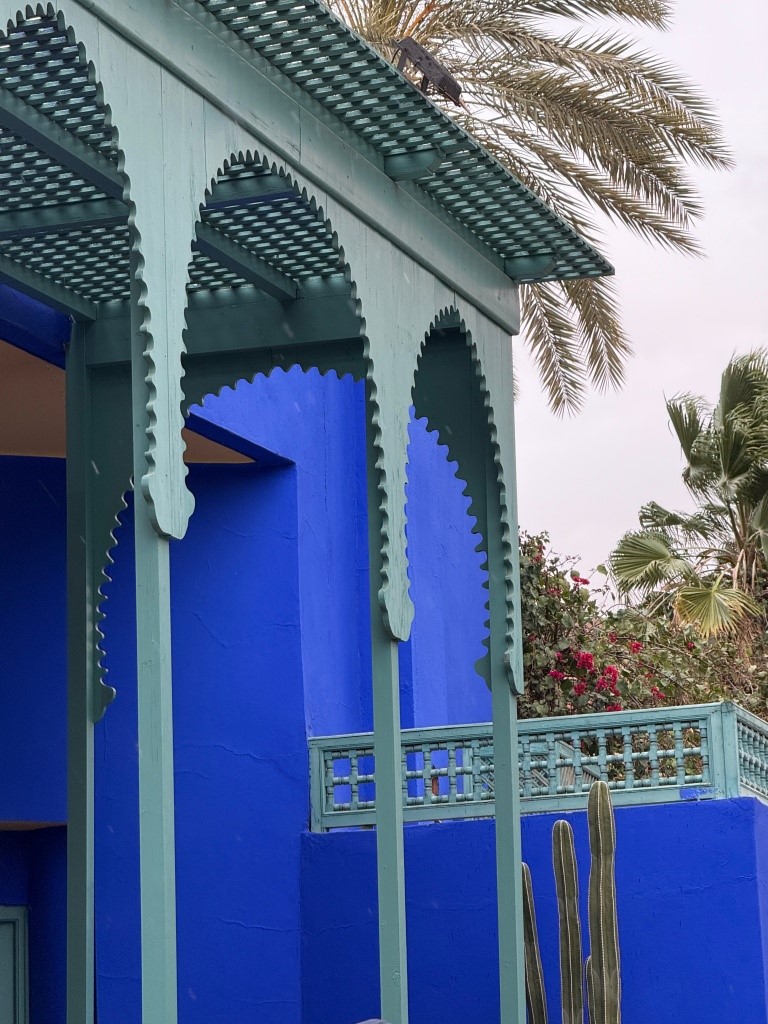
Tucked away in the bustling Medina of Marrakech, this 400 year old garden boasts a diverse collection of plants. This garden complex is an stunning example of a mix of Moroccan and Andalusian architecture. You can buy tickets at the counter.
Opening hours : 9.30 am to 7.30 pm (closing hours differ based on season and Ramadan)
Ticket prices : 100 MAD

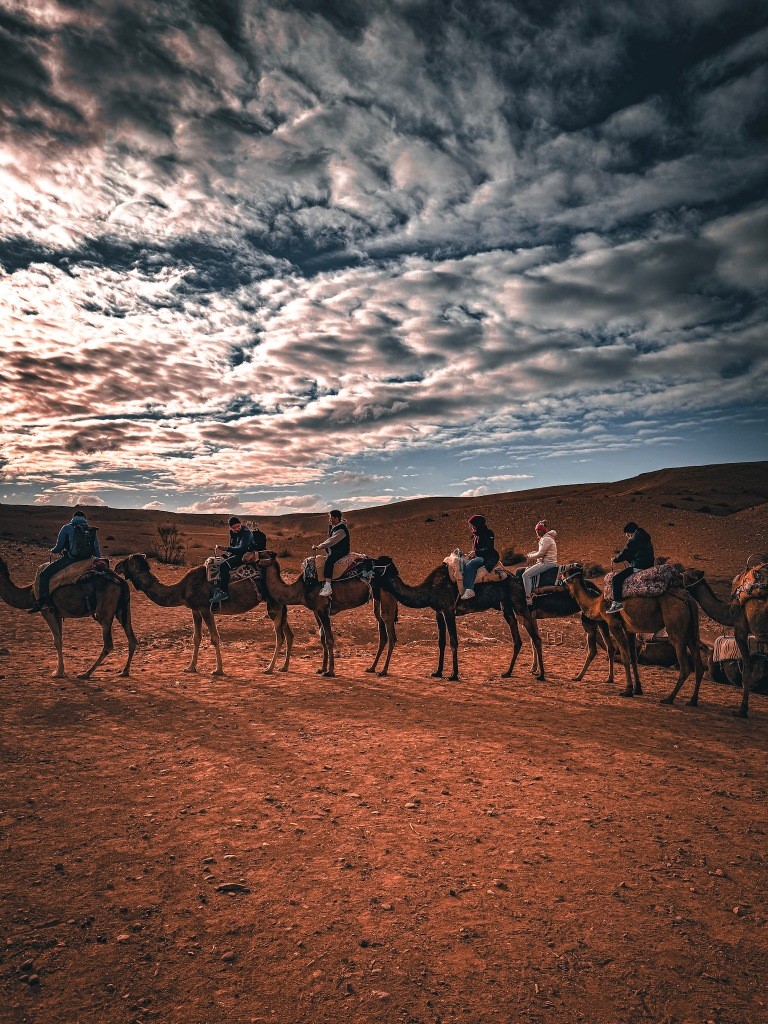
One of most memorable trips from Marrakech was our visit to the Agafay desert, which is the gateway to the Sahara desert. We used a GetYourGuide activity to embark on a captivating journey into the Agafay Desert. This activity will include a camel ride through the desert, while marvelling at the vibrant colors of the sunset, and ending the day with a wholesome & delicious dinner and loads of music and fireworks show.
The souks of medina are the soul of Marrakech. These are traditional marketplace are nestled in the vibrant maze of narrow alleyways , bustling with life, color and history. The souks are divided into sections, each specializing in a particular craft or product. As you wander, you’ll encounter stalls filled with handwoven carpets, intricate lanterns, colorful ceramics, and beautifully embroidered textiles.
One fascinating feature that caught our eye was the distinctive roofs of the souks. Each one stood out with its own unique design, crafted from jute ropes and characterized by a perforated architectural style.
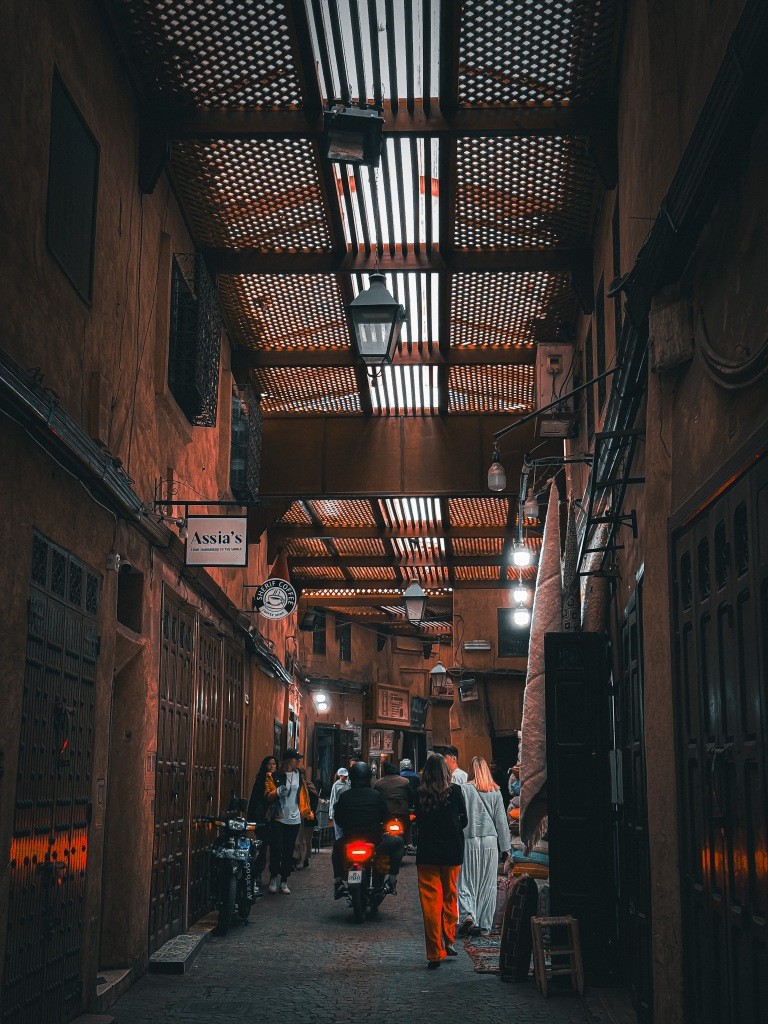

The roofs of the souks
 lost-in-the-world.com